

FBMSG
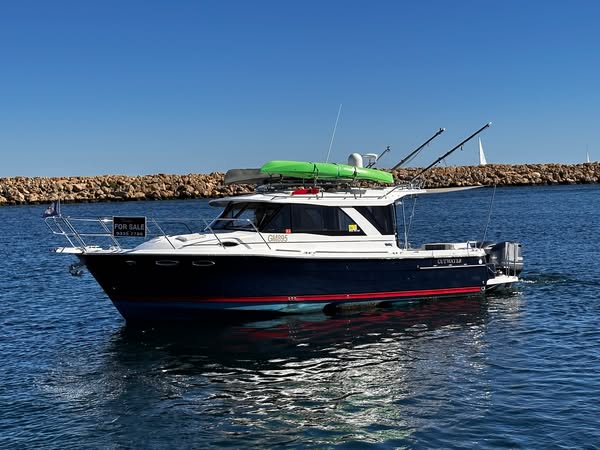
2019 Cutwater 302 Sport Coupe
Twin Yamaha 300s | Thrusters | Generator Price: $349,900
Currently berthed at Aquarama marina
Pen available if required!
Yachts West Marine Brokers are pleased to present this impressive 2019 Cutwater 302 Sport Coupe, a highly capable offshore cruiser that combines serious performance with luxury cruising comfort.
For those unfamiliar with the Cutwater brand, these vessels were engineered in the Pacific Northwest of the United States, a region well known for demanding coastal conditions very similar to those experienced along the Western Australian coastline. As a result, the Cutwater range is designed to deliver confidence offshore when conditions change.
The Cutwater 302 rides on a high-performance double-stepped deep-V hull, incorporating Cutwater’s patented Laminar Flow Interrupter technology. This advanced hull design reduces drag, improves lift and increases efficiency while delivering exceptional handling and stability.
Reverse chines provide additional spray deflection and stability, producing a dry and controlled ride even in rough conditions.
In practical Western Australian terms, this is exactly the type of vessel designed to handle the run home from Rottnest Island when the Fremantle Doctor arrives and the conditions become lumpy.
Powered by twin Yamaha F300 four-stroke outboards, the vessel delivers impressive performance with speeds exceeding 40 knots, while comfortably cruising between 22–35 knots.
Offshore Fishing Capability
The Cutwater 302 is equally suited to serious fishing, with a practical cockpit layout designed for offshore use.
Features include:
• Large insulated fish boxes
• 110L live bait tank
• Rocket launchers and rod holders
• Telescopic trolling outriggers
• Large open cockpit workspace
Once the fishing is done, the cockpit easily converts into an outstanding entertaining space.
Entertaining & Cockpit Layout
Designed with versatility in mind, the cockpit transforms into a comfortable social area featuring:
• Flip-out cockpit seating
• Fold-out hull-side seats creating a spacious entertaining area
• Kenyon electric BBQ
• Removable Euro cockpit awning
• Transom shower
• Large swim platform
Forward on the bow are three flip-up hatches that convert into padded seating, creating another relaxing space when anchored.
A forward telescopic boarding ladder integrated into the bow sprit allows easy beach access when exploring islands and bays.
Accommodation
The Cutwater 302 offers impressive accommodation for a vessel of this size, comfortably sleeping up to six adults across three separate sleeping areas.
• Forward master cabin with island double berth
• Convertible dinette double berth
• Additional double cabin beneath the saloon floor
The interior layout maximises flexibility and space, with the helm seat converting into a rear-facing saloon seat and seating arrangements that adapt easily for entertaining or cruising.
Comfort & Systems
This vessel is fully equipped for comfortable cruising with:
• Two reverse-cycle air conditioning units
• Westerbeke generator
Providing climate-controlled comfort in both summer and winter.
Electronics & Equipment
• Twin Garmin 8612XSV chartplotters
• Garmin xHD radar
• Garmin autopilot with wireless remote
• Bow and stern thrusters with remote control
• Magnum inverter charger system
• Solar panel system
• Fusion multi-zone sound system
Key Specifications
Length: 11.48m (37'8")
Beam: 3.05m
Draft: 0.84m
Engines: Twin Yamaha F300 four-stroke outboards
Engine Hours: Approx. 260 hours
Cruising Speed: 22–35 knots
Top Speed: 40+ knots
Fuel Capacity: 1135L
Water Capacity: 302L
The Opportunity
The Cutwater 302 is a rare vessel in Australia, offering a unique combination of offshore capability, luxury cruising comfort and impressive performance.
For Western Australian boating conditions, this is exactly the type of vessel that allows you to cruise further with confidence and return comfortably when conditions change.
💰 Price: $349,900
For further information or to arrange an inspection, please contact:
Yachts West Marine Brokers
Send message
See full ad →
Started15 May 2026
Running for10d

FBIGANMSG
Read This If You Had Prostate Surgery 👆
If You're On Trimix After Prostate Surgery, Read This Before Your Next Shot
I'm 67. I had my prostate removed in May 2024. Gleason 7. Both nerves spared, per my surgeon. I doubt that now.
Thirteen months after surgery, my urologist handed me a vial of Trimix and showed me how to inject myself.
The first night I sat on the edge of our bed shaking. I did it anyway. Ten minutes later I was hard for the first time since the catheter came out.
My wife and I cried that night. Married 39 years. It had been almost a year.
For thirteen months Trimix was my game-changer. Tuesday and Saturday nights. Insulated lunch bag for road trips. Syringes in checked luggage.
Then the bending started. Maybe 15 degrees. Then 30.
Then the bruises stopped fading between shots.
Then I hit a vein and sat in a cold bath at midnight for forty minutes praying it would come down before I had to go to the ER.
Then the dose stopped working.
I went back to my urologist. He examined me, ran his fingers along the shaft, and said two words I've thought about every day since.
"Significant fibrosis."
Scar tissue. Inelastic. Most of an inch of length, gone. The injections had been compounding damage every single shot.
He told me this the way you'd read a weather report. He said "unfortunately" once, looked at his screen, and started typing a referral. He was the man who'd handed me the vial fourteen months earlier and walked me through the technique. There was no acknowledgement of that.
Two weeks later I was sitting across from a surgical specialist looking at a plastic model of an inflatable penile prosthesis. He scheduled me for July 8th. Nine in the morning.
I cancelled it last week.
The reason I cancelled it is the same reason I'm writing this. A man named Walt caught me in a parking lot four days after that consultation and told me what no urologist had ever told me:
The injection wasn't a treatment.
It was an accelerant.
And here's what he said next.
We were standing between our trucks. He pulled out his phone. He had notes.
"Two problems. Not one. The doctors only treat one of them, and they treat it badly."
"Prostate surgery crashes your testosterone. The trauma, the inflammation, the disruption to the whole pelvic axis — it tanks. Mine dropped from 410 to 263 in eight weeks. They won't replace it after prostate cancer because they're worried about feeding any cell they missed. So they ignore it. They let you walk around in half a man's body and they don't tell you that's why you feel the way you feel."
I felt something cold move through my chest. The half-the-man-I-used-to-be feeling I hadn't been able to name. The shell-of-the-guy-I-was thing. The mornings I'd look in the mirror and not recognize the softness around my eyes. I'd put all of that down to the cancer, the surgery, the pills. Walt was telling me there was a number behind it.
"But here's the part that matters for what's happening in your shorts. Testosterone is what keeps the smooth muscle inside your shaft alive. Without it, that tissue dies. Slowly. Quietly. Use it or lose it — that's not just a saying. That's the actual mechanism. The smooth muscle is what holds blood when you get hard. You lose it, you lose the function. Period."
I thought about the inch I'd lost. The softness that had moved in. The fact that I'd stopped looking at myself in the mirror after a shower.
"Second problem. The surgery damages the nerves that signal blood flow. Vessels stop opening on their own. Scar tissue forms inside the chambers. The valves that hold blood inside stop working. That's what they call venous leak. Blood goes in, and then it just runs back out the same way it came."
I nodded. I'd heard that term in the surgical urologist's office. He'd drawn a little diagram on the back of a prescription pad. The drawing looked like a bathtub with the plug pulled.
"Your care team took zero steps to address either one. Mine either. They handed us pills, then a pump, then a needle. Each one missing the mechanism entirely. The pills tried to amplify a signal your nerves can't send. The pump tried to force blood into a chamber that can't hold it. And the needle is the worst of the three. Here's why."
He held up his phone like he was about to show me a picture but didn't.
"Every shot forces blood into vessels that can't trap it. Blood in, blood back out. The tissue takes repeat trauma — needle puncture, three different chemicals expanding the chamber against scar tissue already forming, pressure your body has no way to release. Each injection, more fibrosis. Your testosterone is too low to repair anything between sessions. You weren't treating it. You were running demolition on what you had left."
"That's why the curve appeared. That's why the bruising stopped fading. That's why the dose stopped working."
I felt sick. Sick in the actual physical way — like the floor of the parking lot had tilted. He'd walked me through in five minutes what fourteen months of Trimix had done to my body. What "significant fibrosis" had meant when the man with the prescription pad said it like he was telling me my tire pressure was low.
"And the implant doesn't fix it either. They cut into the chambers, hollow them out, put in two cylinders connected to a pump in your scrotum and a reservoir behind your abdominal wall. Whatever real tissue you have left after all this is destroyed by the procedure itself. The natural function — even the small percentage you might still recover — that's gone the moment they make the first incision. There's no going back from it."
I'd known the surgery was permanent. I hadn't known what permanent actually meant.
"But if you rebuild the foundation — testosterone — and you stop forcing the damage, the tissue you have left can heal. It's not as much as you had before surgery. It might never be. But valves can recover. Smooth muscle can come back. Vessels can start opening again from the inside. The opposite of what Trimix was doing. The opposite of what the implant ends forever."
"How do you know all this?" I asked him.
"My neighbor," he said. "Retired hospital pharmacist named Frank. Twenty-some years on the oncology floor at Cleveland Clinic. He saw a lot of guys like us come through chemo and surgery and end up exactly where we ended up — with urologists who'd run out of options and were funneling everyone toward the same one-way door. I had my own implant scheduled six months ago. Went over the fence with a beer one Sunday and asked him what to do. I cancelled it three weeks later."
"And what did he tell you to take?"
== What Walt's Neighbor Had Him Take ==
"Pharmaceutical-grade Himalayan shilajit. He was a pain in the ass about the details."
He pulled up a photo of a bottle on his phone.
"Had to be high-altitude. Above 16,000 feet. Frank said most of what's on Amazon is harvested down near roads, near farms, in foothills — basically eating soil runoff with heavy metals leached into it. Lead, arsenic, mercury. Stuff you don't want anywhere near a body that's already trying to repair itself. The altitude concentrates what you actually want: trace minerals, fulvic acid. Below 16,000 feet, you're getting dirt with a label on it."
He scrolled to another photo. A certificate from somewhere in Australia.
"Cheap brands heat-process it into gummies and powders, which destroys the active compounds. Has to be water-purified, slow, no solvents, no heat above body temperature. About sixty days of filtration. Most companies skip it because it eats into margin. Frank said you can tell the difference under a mass spec — the cheap stuff has maybe a fifth of the fulvic acid content."
"And the dose. 4,000 milligrams a day. Amazon bottles say 50, 100, sometimes 250 — Frank said you might as well be eating M&M's. He'd seen guys take the bargain stuff for months and show no movement on bloodwork. The therapeutic dose is non-negotiable."
Walt had gone with a brand called Nexora. Third-party tested at a lab in Australia. Every batch. They posted the results.
"The fulvic acid and the 85+ trace minerals feed the system that makes your testosterone. Doesn't replace it like TRT would. Feeds it. Lets your body make its own again. Frank was specific — for prostate cancer survivors, you cannot inject testosterone, but you can support the body's own production. That's the point of feeding the foundation instead of bypassing it."
"And the same compounds support nitric oxide production right there in the vessel walls. Locally. So even if the nerve signal from the pelvic plexus is weak or scrambled, the vessels can start opening from the inside. That's the workaround for the venous leak. You're not waiting for the nerves to come back. You're getting blood flow from a different door."
"Foundation. Mechanics. That's the whole point. One of them without the other is half a job."
He'd been on it 14 weeks. Cancelled his implant six weeks earlier. He showed me his hormone panel from before and after. The before number had a little red flag next to it. The after number didn't.
I went home that night and ordered three bottles. $179.97 for the 90-day supply. About $1.97 a day. Less than a cup of coffee from the gas station down the road from my house. 90-day money-back guarantee. Not on Amazon — Walt was clear about that. Direct from the company.
Ten weeks before they cut me open. If it didn't move the needle, I wasn't out anything I couldn't afford to lose.
== Ten Weeks ==
The first ten days I felt nothing. I started thinking I'd just paid $180 for more expensive disappointment.
Then a Wednesday morning in week two — I woke up at 5:30 without an alarm and lay there trying to figure out what was different. It wasn't anything below the waist. It was that I'd actually slept. All the way through. The 3 a.m. wake-up that had been part of my life since the catheter came out hadn't happened. I felt clear in a way I'd forgotten was a thing.
Some morning during week three — I don't remember which day — I noticed something stirring. A partial. Maybe a third of the way back. Lasted a few minutes and faded. The first sign of anything in twenty-three months that hadn't come from a pill, a pump, or a needle. I sat on the edge of the bed staring at the wall not believing what I'd just felt.
Then nothing for five days.
Then two mornings in a row in week four. Then nothing again.
The chaos of it was the part I hadn't expected. I'd assumed if it worked, it would work like a dial — turn it up by half a percent each week. Instead it came in waves. A morning of something. Three days of nothing. A surprise on a Tuesday afternoon when I wasn't thinking about it. My body was doing things on a schedule it hadn't run on in two years and I had no control over the timing.
Week five — my wife reached for me one Saturday morning in a way she hadn't in over a year. I got to about 55% with stimulation. Couldn't finish, but I didn't lose it either. Held her for an hour after. We didn't talk about what had just happened. Didn't have to. Even that was a victory I hadn't dared imagine.
Week six I woke up hard three mornings out of seven. Real hard. The kind I used to wake up with in my forties without thinking about it. I'd lie there for a minute just to confirm what I was feeling was actually happening.
By week eight it was full rigidity. Straight. No curve. No pain on either side. The first normal erection in two years that I hadn't forced into existence with a chemical or a vacuum. I checked my own body the way you'd check a car after a long repair — does the steering still pull, is there any noise from the bearing. There wasn't. It just worked.
Week nine, we slept together for the first time without injecting. It worked. Not chemistry. Not equipment. Me.
I lay there afterward staring at the ceiling, and I'm not sure I've ever felt anything quite like it. Not joy exactly. Something quieter. Like getting a piece of yourself back you'd given up for gone. The shell of the guy I used to be — Walt's phrase, my reality — had walked back inside the house and sat down at the kitchen table.
== The Phone Call ==
Wednesday last week. I'd been to the hardware store for a new bathroom faucet — the old one had been dripping for two months and I'd kept putting it off the way I'd been putting off everything else. I sat in my truck in the parking lot with the bag on the passenger seat. The surgery date was in my phone calendar. July 8th. 7:00 a.m. arrival. NPO after midnight. The reminder had been pinging me for weeks.
I scrolled to the surgeon's office number and called.
I told the woman at the front desk I wanted to cancel the procedure scheduled for July 8th.
She asked if I wanted to reschedule.
I said no.
She paused — they get told no for that procedure roughly never — and asked if I'd discussed it with my urologist. I said I hadn't, and that I wasn't going to. She read me a paragraph about cancellation policy. I said I understood. We hung up.
I sat in the truck for a few minutes afterward with my hand on the gearshift. Outside, two guys in the next row over were loading a sheet of plywood into the back of a Tahoe. Normal Wednesday. The world kept doing what it had been doing while my life had been on hold.
I drove home.
I didn't tell my wife that day. I told her over dinner on Friday — pork chops, the green beans she does with the almonds. I told her I'd cancelled the July 8th procedure. I told her why. She listened all the way through, set her fork down on the edge of her plate, squeezed my hand once, and said, "I knew you'd find another way."
We kept eating. The radio was on low in the kitchen. After a few minutes she said the green beans had gotten cold and got up to put them back in the pan, and I watched her stand at the stove the way I'd watched her stand at the stove for thirty-nine years, and I thought: I am sitting at this table as the man she married, not the half-man we'd both been pretending was good enough.
== If You're Where I Was ==
If your urologist has put a date on a calendar for an implant — read this part carefully.
That surgery is a one-way door. Once those cylinders go in, the natural tissue you have left is destroyed by the procedure itself. Whatever your body could have done on its own — even after Trimix, even after fibrosis — is gone the moment they make the first incision. There is no version of the next twenty years where you find out what that other path would have looked like.
That doesn't mean don't ever do it. It means: before you submit to that, make sure you've actually addressed both of the problems your body is dealing with. Most men never do. Most men don't even know there are two problems, because nobody told them. I didn't know until a man cornered me in a parking lot.
Every week you stay on injections, the fibrosis gets worse. Every week the dose stops working a little more. Every week the calendar moves closer to the date the surgical specialist circled. The window doesn't close all at once — it closes a little each day, and then one morning you're inside an OR and the choice doesn't exist anymore.
The kind I take is Nexora. Sourced above 16,000 feet. 60-day water purification. Third-party tested in the United States. 4,000mg therapeutic dose. About $1.93 a day on the 90-day pack. 90-day money-back guarantee. Not on Amazon.
I'm not affiliated with them. I'm a 67-year-old man who was scheduled for an implant and isn't anymore.
== What I'd Tell You If We Were Standing In A Parking Lot ==
1. The implant is permanent. Once those cylinders go in, the natural tissue you have left is destroyed by the procedure itself. One-way door. Whatever recovery your body might still be capable of — gone in the first ten minutes of the surgery.
2. Pills can't fix nerve damage. Viagra and Cialis amplify a signal your nerves can't send anymore. There's nothing for them to amplify. That's why they stopped working. It wasn't your fault.
3. Trimix isn't a treatment. It's an accelerant. Every injection forces blood through compromised tissue and adds repeat trauma your low testosterone can't repair. Each shot, more fibrosis. Each shot, less length, more curve, more bruising.
4. Prostate surgery crashes testosterone, and nobody addresses it. They won't replace it — they're worried about feeding cancer cells. So they leave the foundation broken. Without that foundation, the tissue can't repair, the muscle can't stay healthy, and the vessels can't function. You can't fix anything downstream until you fix this.
5. The two problems have to be fixed together. Testosterone foundation. Local nitric oxide support inside the vessel walls. One without the other is half a job. The supplement has to do both.
6. The window is closing, but it isn't closed. Most men hit a point in the second year where the medical system tells them they're out of options. That's not the same as being out of options. That's the medical system being out of options it knows how to bill for.
Every week you wait, the fibrosis is still working. The clock the urologist started fourteen months ago is still running. The man on the other side of the implant is not the man you were before surgery — he doesn't get to find out what was still possible.
I'm not telling you what to do. I'm telling you what I did.
I cancelled the surgery.
And the bathroom faucet still needs to be installed.
Here is the link to their website: https://www.storenexora.com/products/10-in-1-alpha-shilajit-gummies
Shop now
See full ad →
Started12 May 2026
Running for13d
FBIGANMSG
Read This If You Had Prostate Surgery 👆
If You're On Trimix After Prostate Surgery, Read This Before Your Next Shot
I'm 67. I had my prostate removed in May 2024. Gleason 7. Both nerves spared, per my surgeon. I doubt that now.
Thirteen months after surgery, my urologist handed me a vial of Trimix and showed me how to inject myself.
The first night I sat on the edge of our bed shaking. I did it anyway. Ten minutes later I was hard for the first time since the catheter came out.
My wife and I cried that night. Married 39 years. It had been almost a year.
For thirteen months Trimix was my game-changer. Tuesday and Saturday nights. Insulated lunch bag for road trips. Syringes in checked luggage.
Then the bending started. Maybe 15 degrees. Then 30.
Then the bruises stopped fading between shots.
Then I hit a vein and sat in a cold bath at midnight for forty minutes praying it would come down before I had to go to the ER.
Then the dose stopped working.
I went back to my urologist. He examined me, ran his fingers along the shaft, and said two words I've thought about every day since.
"Significant fibrosis."
Scar tissue. Inelastic. Most of an inch of length, gone. The injections had been compounding damage every single shot.
He told me this the way you'd read a weather report. He said "unfortunately" once, looked at his screen, and started typing a referral. He was the man who'd handed me the vial fourteen months earlier and walked me through the technique. There was no acknowledgement of that.
Two weeks later I was sitting across from a surgical specialist looking at a plastic model of an inflatable penile prosthesis. He scheduled me for July 8th. Nine in the morning.
I cancelled it last week.
The reason I cancelled it is the same reason I'm writing this. A man named Walt caught me in a parking lot four days after that consultation and told me what no urologist had ever told me:
The injection wasn't a treatment.
It was an accelerant.
And here's what he said next.
We were standing between our trucks. He pulled out his phone. He had notes.
"Two problems. Not one. The doctors only treat one of them, and they treat it badly."
"Prostate surgery crashes your testosterone. The trauma, the inflammation, the disruption to the whole pelvic axis — it tanks. Mine dropped from 410 to 263 in eight weeks. They won't replace it after prostate cancer because they're worried about feeding any cell they missed. So they ignore it. They let you walk around in half a man's body and they don't tell you that's why you feel the way you feel."
I felt something cold move through my chest. The half-the-man-I-used-to-be feeling I hadn't been able to name. The shell-of-the-guy-I-was thing. The mornings I'd look in the mirror and not recognize the softness around my eyes. I'd put all of that down to the cancer, the surgery, the pills. Walt was telling me there was a number behind it.
"But here's the part that matters for what's happening in your shorts. Testosterone is what keeps the smooth muscle inside your shaft alive. Without it, that tissue dies. Slowly. Quietly. Use it or lose it — that's not just a saying. That's the actual mechanism. The smooth muscle is what holds blood when you get hard. You lose it, you lose the function. Period."
I thought about the inch I'd lost. The softness that had moved in. The fact that I'd stopped looking at myself in the mirror after a shower.
"Second problem. The surgery damages the nerves that signal blood flow. Vessels stop opening on their own. Scar tissue forms inside the chambers. The valves that hold blood inside stop working. That's what they call venous leak. Blood goes in, and then it just runs back out the same way it came."
I nodded. I'd heard that term in the surgical urologist's office. He'd drawn a little diagram on the back of a prescription pad. The drawing looked like a bathtub with the plug pulled.
"Your care team took zero steps to address either one. Mine either. They handed us pills, then a pump, then a needle. Each one missing the mechanism entirely. The pills tried to amplify a signal your nerves can't send. The pump tried to force blood into a chamber that can't hold it. And the needle is the worst of the three. Here's why."
He held up his phone like he was about to show me a picture but didn't.
"Every shot forces blood into vessels that can't trap it. Blood in, blood back out. The tissue takes repeat trauma — needle puncture, three different chemicals expanding the chamber against scar tissue already forming, pressure your body has no way to release. Each injection, more fibrosis. Your testosterone is too low to repair anything between sessions. You weren't treating it. You were running demolition on what you had left."
"That's why the curve appeared. That's why the bruising stopped fading. That's why the dose stopped working."
I felt sick. Sick in the actual physical way — like the floor of the parking lot had tilted. He'd walked me through in five minutes what fourteen months of Trimix had done to my body. What "significant fibrosis" had meant when the man with the prescription pad said it like he was telling me my tire pressure was low.
"And the implant doesn't fix it either. They cut into the chambers, hollow them out, put in two cylinders connected to a pump in your scrotum and a reservoir behind your abdominal wall. Whatever real tissue you have left after all this is destroyed by the procedure itself. The natural function — even the small percentage you might still recover — that's gone the moment they make the first incision. There's no going back from it."
I'd known the surgery was permanent. I hadn't known what permanent actually meant.
"But if you rebuild the foundation — testosterone — and you stop forcing the damage, the tissue you have left can heal. It's not as much as you had before surgery. It might never be. But valves can recover. Smooth muscle can come back. Vessels can start opening again from the inside. The opposite of what Trimix was doing. The opposite of what the implant ends forever."
"How do you know all this?" I asked him.
"My neighbor," he said. "Retired hospital pharmacist named Frank. Twenty-some years on the oncology floor at Cleveland Clinic. He saw a lot of guys like us come through chemo and surgery and end up exactly where we ended up — with urologists who'd run out of options and were funneling everyone toward the same one-way door. I had my own implant scheduled six months ago. Went over the fence with a beer one Sunday and asked him what to do. I cancelled it three weeks later."
"And what did he tell you to take?"
== What Walt's Neighbor Had Him Take ==
"Pharmaceutical-grade Himalayan shilajit. He was a pain in the ass about the details."
He pulled up a photo of a bottle on his phone.
"Had to be high-altitude. Above 16,000 feet. Frank said most of what's on Amazon is harvested down near roads, near farms, in foothills — basically eating soil runoff with heavy metals leached into it. Lead, arsenic, mercury. Stuff you don't want anywhere near a body that's already trying to repair itself. The altitude concentrates what you actually want: trace minerals, fulvic acid. Below 16,000 feet, you're getting dirt with a label on it."
He scrolled to another photo. A certificate from somewhere in Australia.
"Cheap brands heat-process it into gummies and powders, which destroys the active compounds. Has to be water-purified, slow, no solvents, no heat above body temperature. About sixty days of filtration. Most companies skip it because it eats into margin. Frank said you can tell the difference under a mass spec — the cheap stuff has maybe a fifth of the fulvic acid content."
"And the dose. 4,000 milligrams a day. Amazon bottles say 50, 100, sometimes 250 — Frank said you might as well be eating M&M's. He'd seen guys take the bargain stuff for months and show no movement on bloodwork. The therapeutic dose is non-negotiable."
Walt had gone with a brand called Nexora. Third-party tested at a lab in Australia. Every batch. They posted the results.
"The fulvic acid and the 85+ trace minerals feed the system that makes your testosterone. Doesn't replace it like TRT would. Feeds it. Lets your body make its own again. Frank was specific — for prostate cancer survivors, you cannot inject testosterone, but you can support the body's own production. That's the point of feeding the foundation instead of bypassing it."
"And the same compounds support nitric oxide production right there in the vessel walls. Locally. So even if the nerve signal from the pelvic plexus is weak or scrambled, the vessels can start opening from the inside. That's the workaround for the venous leak. You're not waiting for the nerves to come back. You're getting blood flow from a different door."
"Foundation. Mechanics. That's the whole point. One of them without the other is half a job."
He'd been on it 14 weeks. Cancelled his implant six weeks earlier. He showed me his hormone panel from before and after. The before number had a little red flag next to it. The after number didn't.
I went home that night and ordered three bottles. $179.97 for the 90-day supply. About $1.97 a day. Less than a cup of coffee from the gas station down the road from my house. 90-day money-back guarantee. Not on Amazon — Walt was clear about that. Direct from the company.
Ten weeks before they cut me open. If it didn't move the needle, I wasn't out anything I couldn't afford to lose.
== Ten Weeks ==
The first ten days I felt nothing. I started thinking I'd just paid $180 for more expensive disappointment.
Then a Wednesday morning in week two — I woke up at 5:30 without an alarm and lay there trying to figure out what was different. It wasn't anything below the waist. It was that I'd actually slept. All the way through. The 3 a.m. wake-up that had been part of my life since the catheter came out hadn't happened. I felt clear in a way I'd forgotten was a thing.
Some morning during week three — I don't remember which day — I noticed something stirring. A partial. Maybe a third of the way back. Lasted a few minutes and faded. The first sign of anything in twenty-three months that hadn't come from a pill, a pump, or a needle. I sat on the edge of the bed staring at the wall not believing what I'd just felt.
Then nothing for five days.
Then two mornings in a row in week four. Then nothing again.
The chaos of it was the part I hadn't expected. I'd assumed if it worked, it would work like a dial — turn it up by half a percent each week. Instead it came in waves. A morning of something. Three days of nothing. A surprise on a Tuesday afternoon when I wasn't thinking about it. My body was doing things on a schedule it hadn't run on in two years and I had no control over the timing.
Week five — my wife reached for me one Saturday morning in a way she hadn't in over a year. I got to about 55% with stimulation. Couldn't finish, but I didn't lose it either. Held her for an hour after. We didn't talk about what had just happened. Didn't have to. Even that was a victory I hadn't dared imagine.
Week six I woke up hard three mornings out of seven. Real hard. The kind I used to wake up with in my forties without thinking about it. I'd lie there for a minute just to confirm what I was feeling was actually happening.
By week eight it was full rigidity. Straight. No curve. No pain on either side. The first normal erection in two years that I hadn't forced into existence with a chemical or a vacuum. I checked my own body the way you'd check a car after a long repair — does the steering still pull, is there any noise from the bearing. There wasn't. It just worked.
Week nine, we slept together for the first time without injecting. It worked. Not chemistry. Not equipment. Me.
I lay there afterward staring at the ceiling, and I'm not sure I've ever felt anything quite like it. Not joy exactly. Something quieter. Like getting a piece of yourself back you'd given up for gone. The shell of the guy I used to be — Walt's phrase, my reality — had walked back inside the house and sat down at the kitchen table.
== The Phone Call ==
Wednesday last week. I'd been to the hardware store for a new bathroom faucet — the old one had been dripping for two months and I'd kept putting it off the way I'd been putting off everything else. I sat in my truck in the parking lot with the bag on the passenger seat. The surgery date was in my phone calendar. July 8th. 7:00 a.m. arrival. NPO after midnight. The reminder had been pinging me for weeks.
I scrolled to the surgeon's office number and called.
I told the woman at the front desk I wanted to cancel the procedure scheduled for July 8th.
She asked if I wanted to reschedule.
I said no.
She paused — they get told no for that procedure roughly never — and asked if I'd discussed it with my urologist. I said I hadn't, and that I wasn't going to. She read me a paragraph about cancellation policy. I said I understood. We hung up.
I sat in the truck for a few minutes afterward with my hand on the gearshift. Outside, two guys in the next row over were loading a sheet of plywood into the back of a Tahoe. Normal Wednesday. The world kept doing what it had been doing while my life had been on hold.
I drove home.
I didn't tell my wife that day. I told her over dinner on Friday — pork chops, the green beans she does with the almonds. I told her I'd cancelled the July 8th procedure. I told her why. She listened all the way through, set her fork down on the edge of her plate, squeezed my hand once, and said, "I knew you'd find another way."
We kept eating. The radio was on low in the kitchen. After a few minutes she said the green beans had gotten cold and got up to put them back in the pan, and I watched her stand at the stove the way I'd watched her stand at the stove for thirty-nine years, and I thought: I am sitting at this table as the man she married, not the half-man we'd both been pretending was good enough.
== If You're Where I Was ==
If your urologist has put a date on a calendar for an implant — read this part carefully.
That surgery is a one-way door. Once those cylinders go in, the natural tissue you have left is destroyed by the procedure itself. Whatever your body could have done on its own — even after Trimix, even after fibrosis — is gone the moment they make the first incision. There is no version of the next twenty years where you find out what that other path would have looked like.
That doesn't mean don't ever do it. It means: before you submit to that, make sure you've actually addressed both of the problems your body is dealing with. Most men never do. Most men don't even know there are two problems, because nobody told them. I didn't know until a man cornered me in a parking lot.
Every week you stay on injections, the fibrosis gets worse. Every week the dose stops working a little more. Every week the calendar moves closer to the date the surgical specialist circled. The window doesn't close all at once — it closes a little each day, and then one morning you're inside an OR and the choice doesn't exist anymore.
The kind I take is Nexora. Sourced above 16,000 feet. 60-day water purification. Third-party tested in the United States. 4,000mg therapeutic dose. About $1.93 a day on the 90-day pack. 90-day money-back guarantee. Not on Amazon.
I'm not affiliated with them. I'm a 67-year-old man who was scheduled for an implant and isn't anymore.
== What I'd Tell You If We Were Standing In A Parking Lot ==
1. The implant is permanent. Once those cylinders go in, the natural tissue you have left is destroyed by the procedure itself. One-way door. Whatever recovery your body might still be capable of — gone in the first ten minutes of the surgery.
2. Pills can't fix nerve damage. Viagra and Cialis amplify a signal your nerves can't send anymore. There's nothing for them to amplify. That's why they stopped working. It wasn't your fault.
3. Trimix isn't a treatment. It's an accelerant. Every injection forces blood through compromised tissue and adds repeat trauma your low testosterone can't repair. Each shot, more fibrosis. Each shot, less length, more curve, more bruising.
4. Prostate surgery crashes testosterone, and nobody addresses it. They won't replace it — they're worried about feeding cancer cells. So they leave the foundation broken. Without that foundation, the tissue can't repair, the muscle can't stay healthy, and the vessels can't function. You can't fix anything downstream until you fix this.
5. The two problems have to be fixed together. Testosterone foundation. Local nitric oxide support inside the vessel walls. One without the other is half a job. The supplement has to do both.
6. The window is closing, but it isn't closed. Most men hit a point in the second year where the medical system tells them they're out of options. That's not the same as being out of options. That's the medical system being out of options it knows how to bill for.
Every week you wait, the fibrosis is still working. The clock the urologist started fourteen months ago is still running. The man on the other side of the implant is not the man you were before surgery — he doesn't get to find out what was still possible.
I'm not telling you what to do. I'm telling you what I did.
I cancelled the surgery.
And the bathroom faucet still needs to be installed.
Here is the link to their website: https://www.storenexora.com/products/10-in-1-alpha-shilajit-gummies
Shop now
See full ad →
Started11 May 2026
Running for14d
FBIGANMSG
Read This If You Had Prostate Surgery 👆
If You're On Trimix After Prostate Surgery, Read This Before Your Next Shot
I'm 67. I had my prostate removed in May 2024. Gleason 7. Both nerves spared, per my surgeon. I doubt that now.
Thirteen months after surgery, my urologist handed me a vial of Trimix and showed me how to inject myself.
The first night I sat on the edge of our bed shaking. I did it anyway. Ten minutes later I was hard for the first time since the catheter came out.
My wife and I cried that night. Married 39 years. It had been almost a year.
For thirteen months Trimix was my game-changer. Tuesday and Saturday nights. Insulated lunch bag for road trips. Syringes in checked luggage.
Then the bending started. Maybe 15 degrees. Then 30.
Then the bruises stopped fading between shots.
Then I hit a vein and sat in a cold bath at midnight for forty minutes praying it would come down before I had to go to the ER.
Then the dose stopped working.
I went back to my urologist. He examined me, ran his fingers along the shaft, and said two words I've thought about every day since.
"Significant fibrosis."
Scar tissue. Inelastic. Most of an inch of length, gone. The injections had been compounding damage every single shot.
He told me this the way you'd read a weather report. He said "unfortunately" once, looked at his screen, and started typing a referral. He was the man who'd handed me the vial fourteen months earlier and walked me through the technique. There was no acknowledgement of that.
Two weeks later I was sitting across from a surgical specialist looking at a plastic model of an inflatable penile prosthesis. He scheduled me for July 8th. Nine in the morning.
I cancelled it last week.
The reason I cancelled it is the same reason I'm writing this. A man named Walt caught me in a parking lot four days after that consultation and told me what no urologist had ever told me:
The injection wasn't a treatment.
It was an accelerant.
And here's what he said next.
We were standing between our trucks. He pulled out his phone. He had notes.
"Two problems. Not one. The doctors only treat one of them, and they treat it badly."
"Prostate surgery crashes your testosterone. The trauma, the inflammation, the disruption to the whole pelvic axis — it tanks. Mine dropped from 410 to 263 in eight weeks. They won't replace it after prostate cancer because they're worried about feeding any cell they missed. So they ignore it. They let you walk around in half a man's body and they don't tell you that's why you feel the way you feel."
I felt something cold move through my chest. The half-the-man-I-used-to-be feeling I hadn't been able to name. The shell-of-the-guy-I-was thing. The mornings I'd look in the mirror and not recognize the softness around my eyes. I'd put all of that down to the cancer, the surgery, the pills. Walt was telling me there was a number behind it.
"But here's the part that matters for what's happening in your shorts. Testosterone is what keeps the smooth muscle inside your shaft alive. Without it, that tissue dies. Slowly. Quietly. Use it or lose it — that's not just a saying. That's the actual mechanism. The smooth muscle is what holds blood when you get hard. You lose it, you lose the function. Period."
I thought about the inch I'd lost. The softness that had moved in. The fact that I'd stopped looking at myself in the mirror after a shower.
"Second problem. The surgery damages the nerves that signal blood flow. Vessels stop opening on their own. Scar tissue forms inside the chambers. The valves that hold blood inside stop working. That's what they call venous leak. Blood goes in, and then it just runs back out the same way it came."
I nodded. I'd heard that term in the surgical urologist's office. He'd drawn a little diagram on the back of a prescription pad. The drawing looked like a bathtub with the plug pulled.
"Your care team took zero steps to address either one. Mine either. They handed us pills, then a pump, then a needle. Each one missing the mechanism entirely. The pills tried to amplify a signal your nerves can't send. The pump tried to force blood into a chamber that can't hold it. And the needle is the worst of the three. Here's why."
He held up his phone like he was about to show me a picture but didn't.
"Every shot forces blood into vessels that can't trap it. Blood in, blood back out. The tissue takes repeat trauma — needle puncture, three different chemicals expanding the chamber against scar tissue already forming, pressure your body has no way to release. Each injection, more fibrosis. Your testosterone is too low to repair anything between sessions. You weren't treating it. You were running demolition on what you had left."
"That's why the curve appeared. That's why the bruising stopped fading. That's why the dose stopped working."
I felt sick. Sick in the actual physical way — like the floor of the parking lot had tilted. He'd walked me through in five minutes what fourteen months of Trimix had done to my body. What "significant fibrosis" had meant when the man with the prescription pad said it like he was telling me my tire pressure was low.
"And the implant doesn't fix it either. They cut into the chambers, hollow them out, put in two cylinders connected to a pump in your scrotum and a reservoir behind your abdominal wall. Whatever real tissue you have left after all this is destroyed by the procedure itself. The natural function — even the small percentage you might still recover — that's gone the moment they make the first incision. There's no going back from it."
I'd known the surgery was permanent. I hadn't known what permanent actually meant.
"But if you rebuild the foundation — testosterone — and you stop forcing the damage, the tissue you have left can heal. It's not as much as you had before surgery. It might never be. But valves can recover. Smooth muscle can come back. Vessels can start opening again from the inside. The opposite of what Trimix was doing. The opposite of what the implant ends forever."
"How do you know all this?" I asked him.
"My neighbor," he said. "Retired hospital pharmacist named Frank. Twenty-some years on the oncology floor at Cleveland Clinic. He saw a lot of guys like us come through chemo and surgery and end up exactly where we ended up — with urologists who'd run out of options and were funneling everyone toward the same one-way door. I had my own implant scheduled six months ago. Went over the fence with a beer one Sunday and asked him what to do. I cancelled it three weeks later."
"And what did he tell you to take?"
== What Walt's Neighbor Had Him Take ==
"Pharmaceutical-grade Himalayan shilajit. He was a pain in the ass about the details."
He pulled up a photo of a bottle on his phone.
"Had to be high-altitude. Above 16,000 feet. Frank said most of what's on Amazon is harvested down near roads, near farms, in foothills — basically eating soil runoff with heavy metals leached into it. Lead, arsenic, mercury. Stuff you don't want anywhere near a body that's already trying to repair itself. The altitude concentrates what you actually want: trace minerals, fulvic acid. Below 16,000 feet, you're getting dirt with a label on it."
He scrolled to another photo. A certificate from somewhere in Australia.
"Cheap brands heat-process it into gummies and powders, which destroys the active compounds. Has to be water-purified, slow, no solvents, no heat above body temperature. About sixty days of filtration. Most companies skip it because it eats into margin. Frank said you can tell the difference under a mass spec — the cheap stuff has maybe a fifth of the fulvic acid content."
"And the dose. 4,000 milligrams a day. Amazon bottles say 50, 100, sometimes 250 — Frank said you might as well be eating M&M's. He'd seen guys take the bargain stuff for months and show no movement on bloodwork. The therapeutic dose is non-negotiable."
Walt had gone with a brand called Nexora. Third-party tested at a lab in Australia. Every batch. They posted the results.
"The fulvic acid and the 85+ trace minerals feed the system that makes your testosterone. Doesn't replace it like TRT would. Feeds it. Lets your body make its own again. Frank was specific — for prostate cancer survivors, you cannot inject testosterone, but you can support the body's own production. That's the point of feeding the foundation instead of bypassing it."
"And the same compounds support nitric oxide production right there in the vessel walls. Locally. So even if the nerve signal from the pelvic plexus is weak or scrambled, the vessels can start opening from the inside. That's the workaround for the venous leak. You're not waiting for the nerves to come back. You're getting blood flow from a different door."
"Foundation. Mechanics. That's the whole point. One of them without the other is half a job."
He'd been on it 14 weeks. Cancelled his implant six weeks earlier. He showed me his hormone panel from before and after. The before number had a little red flag next to it. The after number didn't.
I went home that night and ordered three bottles. $179.97 for the 90-day supply. About $1.97 a day. Less than a cup of coffee from the gas station down the road from my house. 90-day money-back guarantee. Not on Amazon — Walt was clear about that. Direct from the company.
Ten weeks before they cut me open. If it didn't move the needle, I wasn't out anything I couldn't afford to lose.
== Ten Weeks ==
The first ten days I felt nothing. I started thinking I'd just paid $180 for more expensive disappointment.
Then a Wednesday morning in week two — I woke up at 5:30 without an alarm and lay there trying to figure out what was different. It wasn't anything below the waist. It was that I'd actually slept. All the way through. The 3 a.m. wake-up that had been part of my life since the catheter came out hadn't happened. I felt clear in a way I'd forgotten was a thing.
Some morning during week three — I don't remember which day — I noticed something stirring. A partial. Maybe a third of the way back. Lasted a few minutes and faded. The first sign of anything in twenty-three months that hadn't come from a pill, a pump, or a needle. I sat on the edge of the bed staring at the wall not believing what I'd just felt.
Then nothing for five days.
Then two mornings in a row in week four. Then nothing again.
The chaos of it was the part I hadn't expected. I'd assumed if it worked, it would work like a dial — turn it up by half a percent each week. Instead it came in waves. A morning of something. Three days of nothing. A surprise on a Tuesday afternoon when I wasn't thinking about it. My body was doing things on a schedule it hadn't run on in two years and I had no control over the timing.
Week five — my wife reached for me one Saturday morning in a way she hadn't in over a year. I got to about 55% with stimulation. Couldn't finish, but I didn't lose it either. Held her for an hour after. We didn't talk about what had just happened. Didn't have to. Even that was a victory I hadn't dared imagine.
Week six I woke up hard three mornings out of seven. Real hard. The kind I used to wake up with in my forties without thinking about it. I'd lie there for a minute just to confirm what I was feeling was actually happening.
By week eight it was full rigidity. Straight. No curve. No pain on either side. The first normal erection in two years that I hadn't forced into existence with a chemical or a vacuum. I checked my own body the way you'd check a car after a long repair — does the steering still pull, is there any noise from the bearing. There wasn't. It just worked.
Week nine, we slept together for the first time without injecting. It worked. Not chemistry. Not equipment. Me.
I lay there afterward staring at the ceiling, and I'm not sure I've ever felt anything quite like it. Not joy exactly. Something quieter. Like getting a piece of yourself back you'd given up for gone. The shell of the guy I used to be — Walt's phrase, my reality — had walked back inside the house and sat down at the kitchen table.
== The Phone Call ==
Wednesday last week. I'd been to the hardware store for a new bathroom faucet — the old one had been dripping for two months and I'd kept putting it off the way I'd been putting off everything else. I sat in my truck in the parking lot with the bag on the passenger seat. The surgery date was in my phone calendar. July 8th. 7:00 a.m. arrival. NPO after midnight. The reminder had been pinging me for weeks.
I scrolled to the surgeon's office number and called.
I told the woman at the front desk I wanted to cancel the procedure scheduled for July 8th.
She asked if I wanted to reschedule.
I said no.
She paused — they get told no for that procedure roughly never — and asked if I'd discussed it with my urologist. I said I hadn't, and that I wasn't going to. She read me a paragraph about cancellation policy. I said I understood. We hung up.
I sat in the truck for a few minutes afterward with my hand on the gearshift. Outside, two guys in the next row over were loading a sheet of plywood into the back of a Tahoe. Normal Wednesday. The world kept doing what it had been doing while my life had been on hold.
I drove home.
I didn't tell my wife that day. I told her over dinner on Friday — pork chops, the green beans she does with the almonds. I told her I'd cancelled the July 8th procedure. I told her why. She listened all the way through, set her fork down on the edge of her plate, squeezed my hand once, and said, "I knew you'd find another way."
We kept eating. The radio was on low in the kitchen. After a few minutes she said the green beans had gotten cold and got up to put them back in the pan, and I watched her stand at the stove the way I'd watched her stand at the stove for thirty-nine years, and I thought: I am sitting at this table as the man she married, not the half-man we'd both been pretending was good enough.
== If You're Where I Was ==
If your urologist has put a date on a calendar for an implant — read this part carefully.
That surgery is a one-way door. Once those cylinders go in, the natural tissue you have left is destroyed by the procedure itself. Whatever your body could have done on its own — even after Trimix, even after fibrosis — is gone the moment they make the first incision. There is no version of the next twenty years where you find out what that other path would have looked like.
That doesn't mean don't ever do it. It means: before you submit to that, make sure you've actually addressed both of the problems your body is dealing with. Most men never do. Most men don't even know there are two problems, because nobody told them. I didn't know until a man cornered me in a parking lot.
Every week you stay on injections, the fibrosis gets worse. Every week the dose stops working a little more. Every week the calendar moves closer to the date the surgical specialist circled. The window doesn't close all at once — it closes a little each day, and then one morning you're inside an OR and the choice doesn't exist anymore.
The kind I take is Nexora. Sourced above 16,000 feet. 60-day water purification. Third-party tested in the United States. 4,000mg therapeutic dose. About $1.93 a day on the 90-day pack. 90-day money-back guarantee. Not on Amazon.
I'm not affiliated with them. I'm a 67-year-old man who was scheduled for an implant and isn't anymore.
== What I'd Tell You If We Were Standing In A Parking Lot ==
1. The implant is permanent. Once those cylinders go in, the natural tissue you have left is destroyed by the procedure itself. One-way door. Whatever recovery your body might still be capable of — gone in the first ten minutes of the surgery.
2. Pills can't fix nerve damage. Viagra and Cialis amplify a signal your nerves can't send anymore. There's nothing for them to amplify. That's why they stopped working. It wasn't your fault.
3. Trimix isn't a treatment. It's an accelerant. Every injection forces blood through compromised tissue and adds repeat trauma your low testosterone can't repair. Each shot, more fibrosis. Each shot, less length, more curve, more bruising.
4. Prostate surgery crashes testosterone, and nobody addresses it. They won't replace it — they're worried about feeding cancer cells. So they leave the foundation broken. Without that foundation, the tissue can't repair, the muscle can't stay healthy, and the vessels can't function. You can't fix anything downstream until you fix this.
5. The two problems have to be fixed together. Testosterone foundation. Local nitric oxide support inside the vessel walls. One without the other is half a job. The supplement has to do both.
6. The window is closing, but it isn't closed. Most men hit a point in the second year where the medical system tells them they're out of options. That's not the same as being out of options. That's the medical system being out of options it knows how to bill for.
Every week you wait, the fibrosis is still working. The clock the urologist started fourteen months ago is still running. The man on the other side of the implant is not the man you were before surgery — he doesn't get to find out what was still possible.
I'm not telling you what to do. I'm telling you what I did.
I cancelled the surgery.
And the bathroom faucet still needs to be installed.
Here is the link to their website: https://www.storenexora.com/products/10-in-1-alpha-shilajit-gummies
Shop now
See full ad →
Started11 May 2026
Running for14d
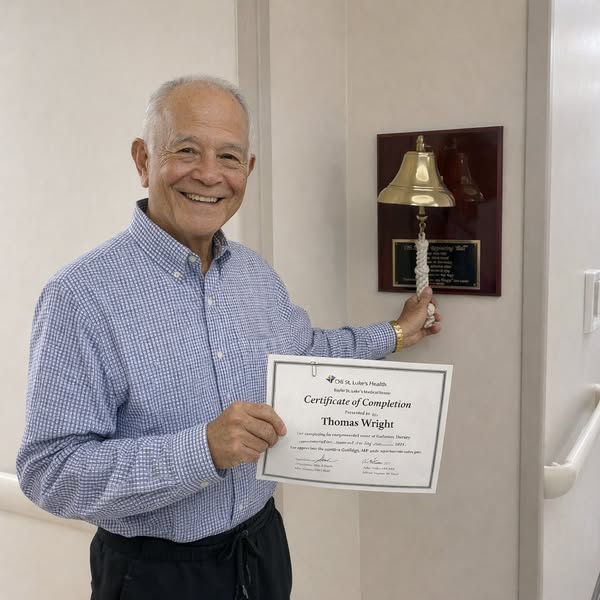
FBIGANMSG
Read This If You Had Prostate Surgery 👆
If You're On Trimix After Prostate Surgery, Read This Before Your Next Shot
I'm 67. I had my prostate removed in May 2024. Gleason 7. Both nerves spared, per my surgeon. I doubt that now.
Thirteen months after surgery, my urologist handed me a vial of Trimix and showed me how to inject myself.
The first night I sat on the edge of our bed shaking. I did it anyway. Ten minutes later I was hard for the first time since the catheter came out.
My wife and I cried that night. Married 39 years. It had been almost a year.
For thirteen months Trimix was my game-changer. Tuesday and Saturday nights. Insulated lunch bag for road trips. Syringes in checked luggage.
Then the bending started. Maybe 15 degrees. Then 30.
Then the bruises stopped fading between shots.
Then I hit a vein and sat in a cold bath at midnight for forty minutes praying it would come down before I had to go to the ER.
Then the dose stopped working.
I went back to my urologist. He examined me, ran his fingers along the shaft, and said two words I've thought about every day since.
"Significant fibrosis."
Scar tissue. Inelastic. Most of an inch of length, gone. The injections had been compounding damage every single shot.
He told me this the way you'd read a weather report. He said "unfortunately" once, looked at his screen, and started typing a referral. He was the man who'd handed me the vial fourteen months earlier and walked me through the technique. There was no acknowledgement of that.
Two weeks later I was sitting across from a surgical specialist looking at a plastic model of an inflatable penile prosthesis. He scheduled me for July 8th. Nine in the morning.
I cancelled it last week.
The reason I cancelled it is the same reason I'm writing this. A man named Walt caught me in a parking lot four days after that consultation and told me what no urologist had ever told me:
The injection wasn't a treatment.
It was an accelerant.
And here's what he said next.
We were standing between our trucks. He pulled out his phone. He had notes.
"Two problems. Not one. The doctors only treat one of them, and they treat it badly."
"Prostate surgery crashes your testosterone. The trauma, the inflammation, the disruption to the whole pelvic axis — it tanks. Mine dropped from 410 to 263 in eight weeks. They won't replace it after prostate cancer because they're worried about feeding any cell they missed. So they ignore it. They let you walk around in half a man's body and they don't tell you that's why you feel the way you feel."
I felt something cold move through my chest. The half-the-man-I-used-to-be feeling I hadn't been able to name. The shell-of-the-guy-I-was thing. The mornings I'd look in the mirror and not recognize the softness around my eyes. I'd put all of that down to the cancer, the surgery, the pills. Walt was telling me there was a number behind it.
"But here's the part that matters for what's happening in your shorts. Testosterone is what keeps the smooth muscle inside your shaft alive. Without it, that tissue dies. Slowly. Quietly. Use it or lose it — that's not just a saying. That's the actual mechanism. The smooth muscle is what holds blood when you get hard. You lose it, you lose the function. Period."
I thought about the inch I'd lost. The softness that had moved in. The fact that I'd stopped looking at myself in the mirror after a shower.
"Second problem. The surgery damages the nerves that signal blood flow. Vessels stop opening on their own. Scar tissue forms inside the chambers. The valves that hold blood inside stop working. That's what they call venous leak. Blood goes in, and then it just runs back out the same way it came."
I nodded. I'd heard that term in the surgical urologist's office. He'd drawn a little diagram on the back of a prescription pad. The drawing looked like a bathtub with the plug pulled.
"Your care team took zero steps to address either one. Mine either. They handed us pills, then a pump, then a needle. Each one missing the mechanism entirely. The pills tried to amplify a signal your nerves can't send. The pump tried to force blood into a chamber that can't hold it. And the needle is the worst of the three. Here's why."
He held up his phone like he was about to show me a picture but didn't.
"Every shot forces blood into vessels that can't trap it. Blood in, blood back out. The tissue takes repeat trauma — needle puncture, three different chemicals expanding the chamber against scar tissue already forming, pressure your body has no way to release. Each injection, more fibrosis. Your testosterone is too low to repair anything between sessions. You weren't treating it. You were running demolition on what you had left."
"That's why the curve appeared. That's why the bruising stopped fading. That's why the dose stopped working."
I felt sick. Sick in the actual physical way — like the floor of the parking lot had tilted. He'd walked me through in five minutes what fourteen months of Trimix had done to my body. What "significant fibrosis" had meant when the man with the prescription pad said it like he was telling me my tire pressure was low.
"And the implant doesn't fix it either. They cut into the chambers, hollow them out, put in two cylinders connected to a pump in your scrotum and a reservoir behind your abdominal wall. Whatever real tissue you have left after all this is destroyed by the procedure itself. The natural function — even the small percentage you might still recover — that's gone the moment they make the first incision. There's no going back from it."
I'd known the surgery was permanent. I hadn't known what permanent actually meant.
"But if you rebuild the foundation — testosterone — and you stop forcing the damage, the tissue you have left can heal. It's not as much as you had before surgery. It might never be. But valves can recover. Smooth muscle can come back. Vessels can start opening again from the inside. The opposite of what Trimix was doing. The opposite of what the implant ends forever."
"How do you know all this?" I asked him.
"My neighbor," he said. "Retired hospital pharmacist named Frank. Twenty-some years on the oncology floor at Cleveland Clinic. He saw a lot of guys like us come through chemo and surgery and end up exactly where we ended up — with urologists who'd run out of options and were funneling everyone toward the same one-way door. I had my own implant scheduled six months ago. Went over the fence with a beer one Sunday and asked him what to do. I cancelled it three weeks later."
"And what did he tell you to take?"
== What Walt's Neighbor Had Him Take ==
"Pharmaceutical-grade Himalayan shilajit. He was a pain in the ass about the details."
He pulled up a photo of a bottle on his phone.
"Had to be high-altitude. Above 16,000 feet. Frank said most of what's on Amazon is harvested down near roads, near farms, in foothills — basically eating soil runoff with heavy metals leached into it. Lead, arsenic, mercury. Stuff you don't want anywhere near a body that's already trying to repair itself. The altitude concentrates what you actually want: trace minerals, fulvic acid. Below 16,000 feet, you're getting dirt with a label on it."
He scrolled to another photo. A certificate from somewhere in Australia.
"Cheap brands heat-process it into gummies and powders, which destroys the active compounds. Has to be water-purified, slow, no solvents, no heat above body temperature. About sixty days of filtration. Most companies skip it because it eats into margin. Frank said you can tell the difference under a mass spec — the cheap stuff has maybe a fifth of the fulvic acid content."
"And the dose. 4,000 milligrams a day. Amazon bottles say 50, 100, sometimes 250 — Frank said you might as well be eating M&M's. He'd seen guys take the bargain stuff for months and show no movement on bloodwork. The therapeutic dose is non-negotiable."
Walt had gone with a brand called Nexora. Third-party tested at a lab in Australia. Every batch. They posted the results.
"The fulvic acid and the 85+ trace minerals feed the system that makes your testosterone. Doesn't replace it like TRT would. Feeds it. Lets your body make its own again. Frank was specific — for prostate cancer survivors, you cannot inject testosterone, but you can support the body's own production. That's the point of feeding the foundation instead of bypassing it."
"And the same compounds support nitric oxide production right there in the vessel walls. Locally. So even if the nerve signal from the pelvic plexus is weak or scrambled, the vessels can start opening from the inside. That's the workaround for the venous leak. You're not waiting for the nerves to come back. You're getting blood flow from a different door."
"Foundation. Mechanics. That's the whole point. One of them without the other is half a job."
He'd been on it 14 weeks. Cancelled his implant six weeks earlier. He showed me his hormone panel from before and after. The before number had a little red flag next to it. The after number didn't.
I went home that night and ordered three bottles. $179.97 for the 90-day supply. About $1.97 a day. Less than a cup of coffee from the gas station down the road from my house. 90-day money-back guarantee. Not on Amazon — Walt was clear about that. Direct from the company.
Ten weeks before they cut me open. If it didn't move the needle, I wasn't out anything I couldn't afford to lose.
== Ten Weeks ==
The first ten days I felt nothing. I started thinking I'd just paid $180 for more expensive disappointment.
Then a Wednesday morning in week two — I woke up at 5:30 without an alarm and lay there trying to figure out what was different. It wasn't anything below the waist. It was that I'd actually slept. All the way through. The 3 a.m. wake-up that had been part of my life since the catheter came out hadn't happened. I felt clear in a way I'd forgotten was a thing.
Some morning during week three — I don't remember which day — I noticed something stirring. A partial. Maybe a third of the way back. Lasted a few minutes and faded. The first sign of anything in twenty-three months that hadn't come from a pill, a pump, or a needle. I sat on the edge of the bed staring at the wall not believing what I'd just felt.
Then nothing for five days.
Then two mornings in a row in week four. Then nothing again.
The chaos of it was the part I hadn't expected. I'd assumed if it worked, it would work like a dial — turn it up by half a percent each week. Instead it came in waves. A morning of something. Three days of nothing. A surprise on a Tuesday afternoon when I wasn't thinking about it. My body was doing things on a schedule it hadn't run on in two years and I had no control over the timing.
Week five — my wife reached for me one Saturday morning in a way she hadn't in over a year. I got to about 55% with stimulation. Couldn't finish, but I didn't lose it either. Held her for an hour after. We didn't talk about what had just happened. Didn't have to. Even that was a victory I hadn't dared imagine.
Week six I woke up hard three mornings out of seven. Real hard. The kind I used to wake up with in my forties without thinking about it. I'd lie there for a minute just to confirm what I was feeling was actually happening.
By week eight it was full rigidity. Straight. No curve. No pain on either side. The first normal erection in two years that I hadn't forced into existence with a chemical or a vacuum. I checked my own body the way you'd check a car after a long repair — does the steering still pull, is there any noise from the bearing. There wasn't. It just worked.
Week nine, we slept together for the first time without injecting. It worked. Not chemistry. Not equipment. Me.
I lay there afterward staring at the ceiling, and I'm not sure I've ever felt anything quite like it. Not joy exactly. Something quieter. Like getting a piece of yourself back you'd given up for gone. The shell of the guy I used to be — Walt's phrase, my reality — had walked back inside the house and sat down at the kitchen table.
== The Phone Call ==
Wednesday last week. I'd been to the hardware store for a new bathroom faucet — the old one had been dripping for two months and I'd kept putting it off the way I'd been putting off everything else. I sat in my truck in the parking lot with the bag on the passenger seat. The surgery date was in my phone calendar. July 8th. 7:00 a.m. arrival. NPO after midnight. The reminder had been pinging me for weeks.
I scrolled to the surgeon's office number and called.
I told the woman at the front desk I wanted to cancel the procedure scheduled for July 8th.
She asked if I wanted to reschedule.
I said no.
She paused — they get told no for that procedure roughly never — and asked if I'd discussed it with my urologist. I said I hadn't, and that I wasn't going to. She read me a paragraph about cancellation policy. I said I understood. We hung up.
I sat in the truck for a few minutes afterward with my hand on the gearshift. Outside, two guys in the next row over were loading a sheet of plywood into the back of a Tahoe. Normal Wednesday. The world kept doing what it had been doing while my life had been on hold.
I drove home.
I didn't tell my wife that day. I told her over dinner on Friday — pork chops, the green beans she does with the almonds. I told her I'd cancelled the July 8th procedure. I told her why. She listened all the way through, set her fork down on the edge of her plate, squeezed my hand once, and said, "I knew you'd find another way."
We kept eating. The radio was on low in the kitchen. After a few minutes she said the green beans had gotten cold and got up to put them back in the pan, and I watched her stand at the stove the way I'd watched her stand at the stove for thirty-nine years, and I thought: I am sitting at this table as the man she married, not the half-man we'd both been pretending was good enough.
== If You're Where I Was ==
If your urologist has put a date on a calendar for an implant — read this part carefully.
That surgery is a one-way door. Once those cylinders go in, the natural tissue you have left is destroyed by the procedure itself. Whatever your body could have done on its own — even after Trimix, even after fibrosis — is gone the moment they make the first incision. There is no version of the next twenty years where you find out what that other path would have looked like.
That doesn't mean don't ever do it. It means: before you submit to that, make sure you've actually addressed both of the problems your body is dealing with. Most men never do. Most men don't even know there are two problems, because nobody told them. I didn't know until a man cornered me in a parking lot.
Every week you stay on injections, the fibrosis gets worse. Every week the dose stops working a little more. Every week the calendar moves closer to the date the surgical specialist circled. The window doesn't close all at once — it closes a little each day, and then one morning you're inside an OR and the choice doesn't exist anymore.
The kind I take is Nexora. Sourced above 16,000 feet. 60-day water purification. Third-party tested in the United States. 4,000mg therapeutic dose. About $1.93 a day on the 90-day pack. 90-day money-back guarantee. Not on Amazon.
I'm not affiliated with them. I'm a 67-year-old man who was scheduled for an implant and isn't anymore.
== What I'd Tell You If We Were Standing In A Parking Lot ==
1. The implant is permanent. Once those cylinders go in, the natural tissue you have left is destroyed by the procedure itself. One-way door. Whatever recovery your body might still be capable of — gone in the first ten minutes of the surgery.
2. Pills can't fix nerve damage. Viagra and Cialis amplify a signal your nerves can't send anymore. There's nothing for them to amplify. That's why they stopped working. It wasn't your fault.
3. Trimix isn't a treatment. It's an accelerant. Every injection forces blood through compromised tissue and adds repeat trauma your low testosterone can't repair. Each shot, more fibrosis. Each shot, less length, more curve, more bruising.
4. Prostate surgery crashes testosterone, and nobody addresses it. They won't replace it — they're worried about feeding cancer cells. So they leave the foundation broken. Without that foundation, the tissue can't repair, the muscle can't stay healthy, and the vessels can't function. You can't fix anything downstream until you fix this.
5. The two problems have to be fixed together. Testosterone foundation. Local nitric oxide support inside the vessel walls. One without the other is half a job. The supplement has to do both.
6. The window is closing, but it isn't closed. Most men hit a point in the second year where the medical system tells them they're out of options. That's not the same as being out of options. That's the medical system being out of options it knows how to bill for.
Every week you wait, the fibrosis is still working. The clock the urologist started fourteen months ago is still running. The man on the other side of the implant is not the man you were before surgery — he doesn't get to find out what was still possible.
I'm not telling you what to do. I'm telling you what I did.
I cancelled the surgery.
And the bathroom faucet still needs to be installed.
Here is the link to their website: https://www.storenexora.com/products/10-in-1-alpha-shilajit-gummies
Shop now
See full ad →
Started11 May 2026
Running for14d
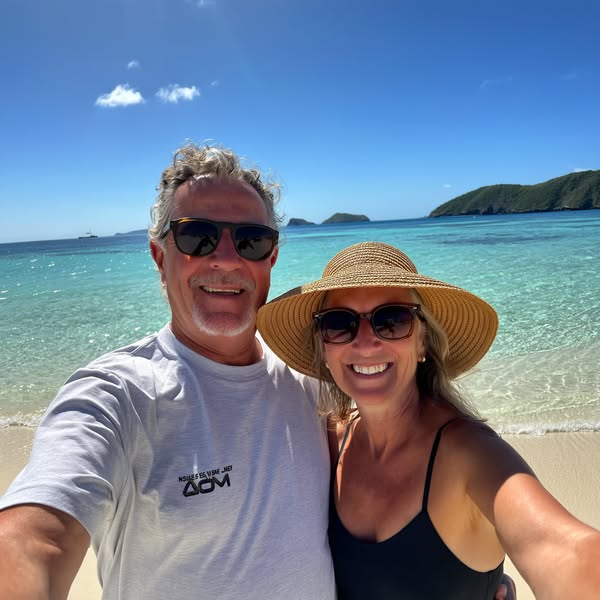
FBIGANMSG
Read This If You Had Prostate Surgery 👆
If You're On Trimix After Prostate Surgery, Read This Before Your Next Shot
I'm 67. I had my prostate removed in May 2024. Gleason 7. Both nerves spared, per my surgeon. I doubt that now.
Thirteen months after surgery, my urologist handed me a vial of Trimix and showed me how to inject myself.
The first night I sat on the edge of our bed shaking. I did it anyway. Ten minutes later I was hard for the first time since the catheter came out.
My wife and I cried that night. Married 39 years. It had been almost a year.
For thirteen months Trimix was my game-changer. Tuesday and Saturday nights. Insulated lunch bag for road trips. Syringes in checked luggage.
Then the bending started. Maybe 15 degrees. Then 30.
Then the bruises stopped fading between shots.
Then I hit a vein and sat in a cold bath at midnight for forty minutes praying it would come down before I had to go to the ER.
Then the dose stopped working.
I went back to my urologist. He examined me, ran his fingers along the shaft, and said two words I've thought about every day since.
"Significant fibrosis."
Scar tissue. Inelastic. Most of an inch of length, gone. The injections had been compounding damage every single shot.
He told me this the way you'd read a weather report. He said "unfortunately" once, looked at his screen, and started typing a referral. He was the man who'd handed me the vial fourteen months earlier and walked me through the technique. There was no acknowledgement of that.
Two weeks later I was sitting across from a surgical specialist looking at a plastic model of an inflatable penile prosthesis. He scheduled me for July 8th. Nine in the morning.
I cancelled it last week.
The reason I cancelled it is the same reason I'm writing this. A man named Walt caught me in a parking lot four days after that consultation and told me what no urologist had ever told me:
The injection wasn't a treatment.
It was an accelerant.
And here's what he said next.
We were standing between our trucks. He pulled out his phone. He had notes.
"Two problems. Not one. The doctors only treat one of them, and they treat it badly."
"Prostate surgery crashes your testosterone. The trauma, the inflammation, the disruption to the whole pelvic axis — it tanks. Mine dropped from 410 to 263 in eight weeks. They won't replace it after prostate cancer because they're worried about feeding any cell they missed. So they ignore it. They let you walk around in half a man's body and they don't tell you that's why you feel the way you feel."
I felt something cold move through my chest. The half-the-man-I-used-to-be feeling I hadn't been able to name. The shell-of-the-guy-I-was thing. The mornings I'd look in the mirror and not recognize the softness around my eyes. I'd put all of that down to the cancer, the surgery, the pills. Walt was telling me there was a number behind it.
"But here's the part that matters for what's happening in your shorts. Testosterone is what keeps the smooth muscle inside your shaft alive. Without it, that tissue dies. Slowly. Quietly. Use it or lose it — that's not just a saying. That's the actual mechanism. The smooth muscle is what holds blood when you get hard. You lose it, you lose the function. Period."
I thought about the inch I'd lost. The softness that had moved in. The fact that I'd stopped looking at myself in the mirror after a shower.
"Second problem. The surgery damages the nerves that signal blood flow. Vessels stop opening on their own. Scar tissue forms inside the chambers. The valves that hold blood inside stop working. That's what they call venous leak. Blood goes in, and then it just runs back out the same way it came."
I nodded. I'd heard that term in the surgical urologist's office. He'd drawn a little diagram on the back of a prescription pad. The drawing looked like a bathtub with the plug pulled.
"Your care team took zero steps to address either one. Mine either. They handed us pills, then a pump, then a needle. Each one missing the mechanism entirely. The pills tried to amplify a signal your nerves can't send. The pump tried to force blood into a chamber that can't hold it. And the needle is the worst of the three. Here's why."
He held up his phone like he was about to show me a picture but didn't.
"Every shot forces blood into vessels that can't trap it. Blood in, blood back out. The tissue takes repeat trauma — needle puncture, three different chemicals expanding the chamber against scar tissue already forming, pressure your body has no way to release. Each injection, more fibrosis. Your testosterone is too low to repair anything between sessions. You weren't treating it. You were running demolition on what you had left."
"That's why the curve appeared. That's why the bruising stopped fading. That's why the dose stopped working."
I felt sick. Sick in the actual physical way — like the floor of the parking lot had tilted. He'd walked me through in five minutes what fourteen months of Trimix had done to my body. What "significant fibrosis" had meant when the man with the prescription pad said it like he was telling me my tire pressure was low.
"And the implant doesn't fix it either. They cut into the chambers, hollow them out, put in two cylinders connected to a pump in your scrotum and a reservoir behind your abdominal wall. Whatever real tissue you have left after all this is destroyed by the procedure itself. The natural function — even the small percentage you might still recover — that's gone the moment they make the first incision. There's no going back from it."
I'd known the surgery was permanent. I hadn't known what permanent actually meant.
"But if you rebuild the foundation — testosterone — and you stop forcing the damage, the tissue you have left can heal. It's not as much as you had before surgery. It might never be. But valves can recover. Smooth muscle can come back. Vessels can start opening again from the inside. The opposite of what Trimix was doing. The opposite of what the implant ends forever."
"How do you know all this?" I asked him.
"My neighbor," he said. "Retired hospital pharmacist named Frank. Twenty-some years on the oncology floor at Cleveland Clinic. He saw a lot of guys like us come through chemo and surgery and end up exactly where we ended up — with urologists who'd run out of options and were funneling everyone toward the same one-way door. I had my own implant scheduled six months ago. Went over the fence with a beer one Sunday and asked him what to do. I cancelled it three weeks later."
"And what did he tell you to take?"
== What Walt's Neighbor Had Him Take ==
"Pharmaceutical-grade Himalayan shilajit. He was a pain in the ass about the details."
He pulled up a photo of a bottle on his phone.
"Had to be high-altitude. Above 16,000 feet. Frank said most of what's on Amazon is harvested down near roads, near farms, in foothills — basically eating soil runoff with heavy metals leached into it. Lead, arsenic, mercury. Stuff you don't want anywhere near a body that's already trying to repair itself. The altitude concentrates what you actually want: trace minerals, fulvic acid. Below 16,000 feet, you're getting dirt with a label on it."
He scrolled to another photo. A certificate from somewhere in Australia.
"Cheap brands heat-process it into gummies and powders, which destroys the active compounds. Has to be water-purified, slow, no solvents, no heat above body temperature. About sixty days of filtration. Most companies skip it because it eats into margin. Frank said you can tell the difference under a mass spec — the cheap stuff has maybe a fifth of the fulvic acid content."
"And the dose. 4,000 milligrams a day. Amazon bottles say 50, 100, sometimes 250 — Frank said you might as well be eating M&M's. He'd seen guys take the bargain stuff for months and show no movement on bloodwork. The therapeutic dose is non-negotiable."
Walt had gone with a brand called Nexora. Third-party tested at a lab in Australia. Every batch. They posted the results.
"The fulvic acid and the 85+ trace minerals feed the system that makes your testosterone. Doesn't replace it like TRT would. Feeds it. Lets your body make its own again. Frank was specific — for prostate cancer survivors, you cannot inject testosterone, but you can support the body's own production. That's the point of feeding the foundation instead of bypassing it."
"And the same compounds support nitric oxide production right there in the vessel walls. Locally. So even if the nerve signal from the pelvic plexus is weak or scrambled, the vessels can start opening from the inside. That's the workaround for the venous leak. You're not waiting for the nerves to come back. You're getting blood flow from a different door."
"Foundation. Mechanics. That's the whole point. One of them without the other is half a job."
He'd been on it 14 weeks. Cancelled his implant six weeks earlier. He showed me his hormone panel from before and after. The before number had a little red flag next to it. The after number didn't.
I went home that night and ordered three bottles. $179.97 for the 90-day supply. About $1.97 a day. Less than a cup of coffee from the gas station down the road from my house. 90-day money-back guarantee. Not on Amazon — Walt was clear about that. Direct from the company.
Ten weeks before they cut me open. If it didn't move the needle, I wasn't out anything I couldn't afford to lose.
== Ten Weeks ==
The first ten days I felt nothing. I started thinking I'd just paid $180 for more expensive disappointment.
Then a Wednesday morning in week two — I woke up at 5:30 without an alarm and lay there trying to figure out what was different. It wasn't anything below the waist. It was that I'd actually slept. All the way through. The 3 a.m. wake-up that had been part of my life since the catheter came out hadn't happened. I felt clear in a way I'd forgotten was a thing.
Some morning during week three — I don't remember which day — I noticed something stirring. A partial. Maybe a third of the way back. Lasted a few minutes and faded. The first sign of anything in twenty-three months that hadn't come from a pill, a pump, or a needle. I sat on the edge of the bed staring at the wall not believing what I'd just felt.
Then nothing for five days.
Then two mornings in a row in week four. Then nothing again.
The chaos of it was the part I hadn't expected. I'd assumed if it worked, it would work like a dial — turn it up by half a percent each week. Instead it came in waves. A morning of something. Three days of nothing. A surprise on a Tuesday afternoon when I wasn't thinking about it. My body was doing things on a schedule it hadn't run on in two years and I had no control over the timing.
Week five — my wife reached for me one Saturday morning in a way she hadn't in over a year. I got to about 55% with stimulation. Couldn't finish, but I didn't lose it either. Held her for an hour after. We didn't talk about what had just happened. Didn't have to. Even that was a victory I hadn't dared imagine.
Week six I woke up hard three mornings out of seven. Real hard. The kind I used to wake up with in my forties without thinking about it. I'd lie there for a minute just to confirm what I was feeling was actually happening.
By week eight it was full rigidity. Straight. No curve. No pain on either side. The first normal erection in two years that I hadn't forced into existence with a chemical or a vacuum. I checked my own body the way you'd check a car after a long repair — does the steering still pull, is there any noise from the bearing. There wasn't. It just worked.
Week nine, we slept together for the first time without injecting. It worked. Not chemistry. Not equipment. Me.
I lay there afterward staring at the ceiling, and I'm not sure I've ever felt anything quite like it. Not joy exactly. Something quieter. Like getting a piece of yourself back you'd given up for gone. The shell of the guy I used to be — Walt's phrase, my reality — had walked back inside the house and sat down at the kitchen table.
== The Phone Call ==
Wednesday last week. I'd been to the hardware store for a new bathroom faucet — the old one had been dripping for two months and I'd kept putting it off the way I'd been putting off everything else. I sat in my truck in the parking lot with the bag on the passenger seat. The surgery date was in my phone calendar. July 8th. 7:00 a.m. arrival. NPO after midnight. The reminder had been pinging me for weeks.
I scrolled to the surgeon's office number and called.
I told the woman at the front desk I wanted to cancel the procedure scheduled for July 8th.
She asked if I wanted to reschedule.
I said no.
She paused — they get told no for that procedure roughly never — and asked if I'd discussed it with my urologist. I said I hadn't, and that I wasn't going to. She read me a paragraph about cancellation policy. I said I understood. We hung up.
I sat in the truck for a few minutes afterward with my hand on the gearshift. Outside, two guys in the next row over were loading a sheet of plywood into the back of a Tahoe. Normal Wednesday. The world kept doing what it had been doing while my life had been on hold.
I drove home.
I didn't tell my wife that day. I told her over dinner on Friday — pork chops, the green beans she does with the almonds. I told her I'd cancelled the July 8th procedure. I told her why. She listened all the way through, set her fork down on the edge of her plate, squeezed my hand once, and said, "I knew you'd find another way."
We kept eating. The radio was on low in the kitchen. After a few minutes she said the green beans had gotten cold and got up to put them back in the pan, and I watched her stand at the stove the way I'd watched her stand at the stove for thirty-nine years, and I thought: I am sitting at this table as the man she married, not the half-man we'd both been pretending was good enough.
== If You're Where I Was ==
If your urologist has put a date on a calendar for an implant — read this part carefully.
That surgery is a one-way door. Once those cylinders go in, the natural tissue you have left is destroyed by the procedure itself. Whatever your body could have done on its own — even after Trimix, even after fibrosis — is gone the moment they make the first incision. There is no version of the next twenty years where you find out what that other path would have looked like.
That doesn't mean don't ever do it. It means: before you submit to that, make sure you've actually addressed both of the problems your body is dealing with. Most men never do. Most men don't even know there are two problems, because nobody told them. I didn't know until a man cornered me in a parking lot.
Every week you stay on injections, the fibrosis gets worse. Every week the dose stops working a little more. Every week the calendar moves closer to the date the surgical specialist circled. The window doesn't close all at once — it closes a little each day, and then one morning you're inside an OR and the choice doesn't exist anymore.
The kind I take is Nexora. Sourced above 16,000 feet. 60-day water purification. Third-party tested in the United States. 4,000mg therapeutic dose. About $1.93 a day on the 90-day pack. 90-day money-back guarantee. Not on Amazon.
I'm not affiliated with them. I'm a 67-year-old man who was scheduled for an implant and isn't anymore.
== What I'd Tell You If We Were Standing In A Parking Lot ==
1. The implant is permanent. Once those cylinders go in, the natural tissue you have left is destroyed by the procedure itself. One-way door. Whatever recovery your body might still be capable of — gone in the first ten minutes of the surgery.
2. Pills can't fix nerve damage. Viagra and Cialis amplify a signal your nerves can't send anymore. There's nothing for them to amplify. That's why they stopped working. It wasn't your fault.
3. Trimix isn't a treatment. It's an accelerant. Every injection forces blood through compromised tissue and adds repeat trauma your low testosterone can't repair. Each shot, more fibrosis. Each shot, less length, more curve, more bruising.
4. Prostate surgery crashes testosterone, and nobody addresses it. They won't replace it — they're worried about feeding cancer cells. So they leave the foundation broken. Without that foundation, the tissue can't repair, the muscle can't stay healthy, and the vessels can't function. You can't fix anything downstream until you fix this.
5. The two problems have to be fixed together. Testosterone foundation. Local nitric oxide support inside the vessel walls. One without the other is half a job. The supplement has to do both.
6. The window is closing, but it isn't closed. Most men hit a point in the second year where the medical system tells them they're out of options. That's not the same as being out of options. That's the medical system being out of options it knows how to bill for.
Every week you wait, the fibrosis is still working. The clock the urologist started fourteen months ago is still running. The man on the other side of the implant is not the man you were before surgery — he doesn't get to find out what was still possible.
I'm not telling you what to do. I'm telling you what I did.
I cancelled the surgery.
And the bathroom faucet still needs to be installed.
Here is the link to their website: https://www.storenexora.com/products/10-in-1-alpha-shilajit-gummies
Shop now
See full ad →
Started10 May 2026
Running for15d
FBIGANMSG
Read This If You Had Prostate Surgery 👆
If You're On Trimix After Prostate Surgery, Read This Before Your Next Shot
I'm 67. I had my prostate removed in May 2024. Gleason 7. Both nerves spared, per my surgeon. I doubt that now.
Thirteen months after surgery, my urologist handed me a vial of Trimix and showed me how to inject myself.
The first night I sat on the edge of our bed shaking. I did it anyway. Ten minutes later I was hard for the first time since the catheter came out.
My wife and I cried that night. Married 39 years. It had been almost a year.
For thirteen months Trimix was my game-changer. Tuesday and Saturday nights. Insulated lunch bag for road trips. Syringes in checked luggage.
Then the bending started. Maybe 15 degrees. Then 30.
Then the bruises stopped fading between shots.
Then I hit a vein and sat in a cold bath at midnight for forty minutes praying it would come down before I had to go to the ER.
Then the dose stopped working.
I went back to my urologist. He examined me, ran his fingers along the shaft, and said two words I've thought about every day since.
"Significant fibrosis."
Scar tissue. Inelastic. Most of an inch of length, gone. The injections had been compounding damage every single shot.
He told me this the way you'd read a weather report. He said "unfortunately" once, looked at his screen, and started typing a referral. He was the man who'd handed me the vial fourteen months earlier and walked me through the technique. There was no acknowledgement of that.
Two weeks later I was sitting across from a surgical specialist looking at a plastic model of an inflatable penile prosthesis. He scheduled me for July 8th. Nine in the morning.
I cancelled it last week.
The reason I cancelled it is the same reason I'm writing this. A man named Walt caught me in a parking lot four days after that consultation and told me what no urologist had ever told me:
The injection wasn't a treatment.
It was an accelerant.
And here's what he said next.
We were standing between our trucks. He pulled out his phone. He had notes.
"Two problems. Not one. The doctors only treat one of them, and they treat it badly."
"Prostate surgery crashes your testosterone. The trauma, the inflammation, the disruption to the whole pelvic axis — it tanks. Mine dropped from 410 to 263 in eight weeks. They won't replace it after prostate cancer because they're worried about feeding any cell they missed. So they ignore it. They let you walk around in half a man's body and they don't tell you that's why you feel the way you feel."
I felt something cold move through my chest. The half-the-man-I-used-to-be feeling I hadn't been able to name. The shell-of-the-guy-I-was thing. The mornings I'd look in the mirror and not recognize the softness around my eyes. I'd put all of that down to the cancer, the surgery, the pills. Walt was telling me there was a number behind it.
"But here's the part that matters for what's happening in your shorts. Testosterone is what keeps the smooth muscle inside your shaft alive. Without it, that tissue dies. Slowly. Quietly. Use it or lose it — that's not just a saying. That's the actual mechanism. The smooth muscle is what holds blood when you get hard. You lose it, you lose the function. Period."
I thought about the inch I'd lost. The softness that had moved in. The fact that I'd stopped looking at myself in the mirror after a shower.
"Second problem. The surgery damages the nerves that signal blood flow. Vessels stop opening on their own. Scar tissue forms inside the chambers. The valves that hold blood inside stop working. That's what they call venous leak. Blood goes in, and then it just runs back out the same way it came."
I nodded. I'd heard that term in the surgical urologist's office. He'd drawn a little diagram on the back of a prescription pad. The drawing looked like a bathtub with the plug pulled.
"Your care team took zero steps to address either one. Mine either. They handed us pills, then a pump, then a needle. Each one missing the mechanism entirely. The pills tried to amplify a signal your nerves can't send. The pump tried to force blood into a chamber that can't hold it. And the needle is the worst of the three. Here's why."
He held up his phone like he was about to show me a picture but didn't.
"Every shot forces blood into vessels that can't trap it. Blood in, blood back out. The tissue takes repeat trauma — needle puncture, three different chemicals expanding the chamber against scar tissue already forming, pressure your body has no way to release. Each injection, more fibrosis. Your testosterone is too low to repair anything between sessions. You weren't treating it. You were running demolition on what you had left."
"That's why the curve appeared. That's why the bruising stopped fading. That's why the dose stopped working."
I felt sick. Sick in the actual physical way — like the floor of the parking lot had tilted. He'd walked me through in five minutes what fourteen months of Trimix had done to my body. What "significant fibrosis" had meant when the man with the prescription pad said it like he was telling me my tire pressure was low.
"And the implant doesn't fix it either. They cut into the chambers, hollow them out, put in two cylinders connected to a pump in your scrotum and a reservoir behind your abdominal wall. Whatever real tissue you have left after all this is destroyed by the procedure itself. The natural function — even the small percentage you might still recover — that's gone the moment they make the first incision. There's no going back from it."
I'd known the surgery was permanent. I hadn't known what permanent actually meant.
"But if you rebuild the foundation — testosterone — and you stop forcing the damage, the tissue you have left can heal. It's not as much as you had before surgery. It might never be. But valves can recover. Smooth muscle can come back. Vessels can start opening again from the inside. The opposite of what Trimix was doing. The opposite of what the implant ends forever."
"How do you know all this?" I asked him.
"My neighbor," he said. "Retired hospital pharmacist named Frank. Twenty-some years on the oncology floor at Cleveland Clinic. He saw a lot of guys like us come through chemo and surgery and end up exactly where we ended up — with urologists who'd run out of options and were funneling everyone toward the same one-way door. I had my own implant scheduled six months ago. Went over the fence with a beer one Sunday and asked him what to do. I cancelled it three weeks later."
"And what did he tell you to take?"
== What Walt's Neighbor Had Him Take ==
"Pharmaceutical-grade Himalayan shilajit. He was a pain in the ass about the details."
He pulled up a photo of a bottle on his phone.
"Had to be high-altitude. Above 16,000 feet. Frank said most of what's on Amazon is harvested down near roads, near farms, in foothills — basically eating soil runoff with heavy metals leached into it. Lead, arsenic, mercury. Stuff you don't want anywhere near a body that's already trying to repair itself. The altitude concentrates what you actually want: trace minerals, fulvic acid. Below 16,000 feet, you're getting dirt with a label on it."
He scrolled to another photo. A certificate from somewhere in Australia.
"Cheap brands heat-process it into gummies and powders, which destroys the active compounds. Has to be water-purified, slow, no solvents, no heat above body temperature. About sixty days of filtration. Most companies skip it because it eats into margin. Frank said you can tell the difference under a mass spec — the cheap stuff has maybe a fifth of the fulvic acid content."
"And the dose. 4,000 milligrams a day. Amazon bottles say 50, 100, sometimes 250 — Frank said you might as well be eating M&M's. He'd seen guys take the bargain stuff for months and show no movement on bloodwork. The therapeutic dose is non-negotiable."
Walt had gone with a brand called Nexora. Third-party tested at a lab in Australia. Every batch. They posted the results.
"The fulvic acid and the 85+ trace minerals feed the system that makes your testosterone. Doesn't replace it like TRT would. Feeds it. Lets your body make its own again. Frank was specific — for prostate cancer survivors, you cannot inject testosterone, but you can support the body's own production. That's the point of feeding the foundation instead of bypassing it."
"And the same compounds support nitric oxide production right there in the vessel walls. Locally. So even if the nerve signal from the pelvic plexus is weak or scrambled, the vessels can start opening from the inside. That's the workaround for the venous leak. You're not waiting for the nerves to come back. You're getting blood flow from a different door."
"Foundation. Mechanics. That's the whole point. One of them without the other is half a job."
He'd been on it 14 weeks. Cancelled his implant six weeks earlier. He showed me his hormone panel from before and after. The before number had a little red flag next to it. The after number didn't.
I went home that night and ordered three bottles. $179.97 for the 90-day supply. About $1.97 a day. Less than a cup of coffee from the gas station down the road from my house. 90-day money-back guarantee. Not on Amazon — Walt was clear about that. Direct from the company.
Ten weeks before they cut me open. If it didn't move the needle, I wasn't out anything I couldn't afford to lose.
== Ten Weeks ==
The first ten days I felt nothing. I started thinking I'd just paid $180 for more expensive disappointment.
Then a Wednesday morning in week two — I woke up at 5:30 without an alarm and lay there trying to figure out what was different. It wasn't anything below the waist. It was that I'd actually slept. All the way through. The 3 a.m. wake-up that had been part of my life since the catheter came out hadn't happened. I felt clear in a way I'd forgotten was a thing.
Some morning during week three — I don't remember which day — I noticed something stirring. A partial. Maybe a third of the way back. Lasted a few minutes and faded. The first sign of anything in twenty-three months that hadn't come from a pill, a pump, or a needle. I sat on the edge of the bed staring at the wall not believing what I'd just felt.
Then nothing for five days.
Then two mornings in a row in week four. Then nothing again.
The chaos of it was the part I hadn't expected. I'd assumed if it worked, it would work like a dial — turn it up by half a percent each week. Instead it came in waves. A morning of something. Three days of nothing. A surprise on a Tuesday afternoon when I wasn't thinking about it. My body was doing things on a schedule it hadn't run on in two years and I had no control over the timing.
Week five — my wife reached for me one Saturday morning in a way she hadn't in over a year. I got to about 55% with stimulation. Couldn't finish, but I didn't lose it either. Held her for an hour after. We didn't talk about what had just happened. Didn't have to. Even that was a victory I hadn't dared imagine.
Week six I woke up hard three mornings out of seven. Real hard. The kind I used to wake up with in my forties without thinking about it. I'd lie there for a minute just to confirm what I was feeling was actually happening.
By week eight it was full rigidity. Straight. No curve. No pain on either side. The first normal erection in two years that I hadn't forced into existence with a chemical or a vacuum. I checked my own body the way you'd check a car after a long repair — does the steering still pull, is there any noise from the bearing. There wasn't. It just worked.
Week nine, we slept together for the first time without injecting. It worked. Not chemistry. Not equipment. Me.
I lay there afterward staring at the ceiling, and I'm not sure I've ever felt anything quite like it. Not joy exactly. Something quieter. Like getting a piece of yourself back you'd given up for gone. The shell of the guy I used to be — Walt's phrase, my reality — had walked back inside the house and sat down at the kitchen table.
== The Phone Call ==
Wednesday last week. I'd been to the hardware store for a new bathroom faucet — the old one had been dripping for two months and I'd kept putting it off the way I'd been putting off everything else. I sat in my truck in the parking lot with the bag on the passenger seat. The surgery date was in my phone calendar. July 8th. 7:00 a.m. arrival. NPO after midnight. The reminder had been pinging me for weeks.
I scrolled to the surgeon's office number and called.
I told the woman at the front desk I wanted to cancel the procedure scheduled for July 8th.
She asked if I wanted to reschedule.
I said no.
She paused — they get told no for that procedure roughly never — and asked if I'd discussed it with my urologist. I said I hadn't, and that I wasn't going to. She read me a paragraph about cancellation policy. I said I understood. We hung up.
I sat in the truck for a few minutes afterward with my hand on the gearshift. Outside, two guys in the next row over were loading a sheet of plywood into the back of a Tahoe. Normal Wednesday. The world kept doing what it had been doing while my life had been on hold.
I drove home.
I didn't tell my wife that day. I told her over dinner on Friday — pork chops, the green beans she does with the almonds. I told her I'd cancelled the July 8th procedure. I told her why. She listened all the way through, set her fork down on the edge of her plate, squeezed my hand once, and said, "I knew you'd find another way."
We kept eating. The radio was on low in the kitchen. After a few minutes she said the green beans had gotten cold and got up to put them back in the pan, and I watched her stand at the stove the way I'd watched her stand at the stove for thirty-nine years, and I thought: I am sitting at this table as the man she married, not the half-man we'd both been pretending was good enough.
== If You're Where I Was ==
If your urologist has put a date on a calendar for an implant — read this part carefully.
That surgery is a one-way door. Once those cylinders go in, the natural tissue you have left is destroyed by the procedure itself. Whatever your body could have done on its own — even after Trimix, even after fibrosis — is gone the moment they make the first incision. There is no version of the next twenty years where you find out what that other path would have looked like.
That doesn't mean don't ever do it. It means: before you submit to that, make sure you've actually addressed both of the problems your body is dealing with. Most men never do. Most men don't even know there are two problems, because nobody told them. I didn't know until a man cornered me in a parking lot.
Every week you stay on injections, the fibrosis gets worse. Every week the dose stops working a little more. Every week the calendar moves closer to the date the surgical specialist circled. The window doesn't close all at once — it closes a little each day, and then one morning you're inside an OR and the choice doesn't exist anymore.
The kind I take is Nexora. Sourced above 16,000 feet. 60-day water purification. Third-party tested in the United States. 4,000mg therapeutic dose. About $1.93 a day on the 90-day pack. 90-day money-back guarantee. Not on Amazon.
I'm not affiliated with them. I'm a 67-year-old man who was scheduled for an implant and isn't anymore.
== What I'd Tell You If We Were Standing In A Parking Lot ==
1. The implant is permanent. Once those cylinders go in, the natural tissue you have left is destroyed by the procedure itself. One-way door. Whatever recovery your body might still be capable of — gone in the first ten minutes of the surgery.
2. Pills can't fix nerve damage. Viagra and Cialis amplify a signal your nerves can't send anymore. There's nothing for them to amplify. That's why they stopped working. It wasn't your fault.
3. Trimix isn't a treatment. It's an accelerant. Every injection forces blood through compromised tissue and adds repeat trauma your low testosterone can't repair. Each shot, more fibrosis. Each shot, less length, more curve, more bruising.
4. Prostate surgery crashes testosterone, and nobody addresses it. They won't replace it — they're worried about feeding cancer cells. So they leave the foundation broken. Without that foundation, the tissue can't repair, the muscle can't stay healthy, and the vessels can't function. You can't fix anything downstream until you fix this.
5. The two problems have to be fixed together. Testosterone foundation. Local nitric oxide support inside the vessel walls. One without the other is half a job. The supplement has to do both.
6. The window is closing, but it isn't closed. Most men hit a point in the second year where the medical system tells them they're out of options. That's not the same as being out of options. That's the medical system being out of options it knows how to bill for.
Every week you wait, the fibrosis is still working. The clock the urologist started fourteen months ago is still running. The man on the other side of the implant is not the man you were before surgery — he doesn't get to find out what was still possible.
I'm not telling you what to do. I'm telling you what I did.
I cancelled the surgery.
And the bathroom faucet still needs to be installed.
Here is the link to their website: https://www.storenexora.com/products/10-in-1-alpha-shilajit-gummies
Shop now
See full ad →
Started10 May 2026
Running for15d
FBIGANMSG
Read This If You Had Prostate Surgery 👆
If You're On Trimix After Prostate Surgery, Read This Before Your Next Shot
I'm 67. I had my prostate removed in May 2024. Gleason 7. Both nerves spared, per my surgeon. I doubt that now.
Thirteen months after surgery, my urologist handed me a vial of Trimix and showed me how to inject myself.
The first night I sat on the edge of our bed shaking. I did it anyway. Ten minutes later I was hard for the first time since the catheter came out.
My wife and I cried that night. Married 39 years. It had been almost a year.
For thirteen months Trimix was my game-changer. Tuesday and Saturday nights. Insulated lunch bag for road trips. Syringes in checked luggage.
Then the bending started. Maybe 15 degrees. Then 30.
Then the bruises stopped fading between shots.
Then I hit a vein and sat in a cold bath at midnight for forty minutes praying it would come down before I had to go to the ER.
Then the dose stopped working.
I went back to my urologist. He examined me, ran his fingers along the shaft, and said two words I've thought about every day since.
"Significant fibrosis."
Scar tissue. Inelastic. Most of an inch of length, gone. The injections had been compounding damage every single shot.
He told me this the way you'd read a weather report. He said "unfortunately" once, looked at his screen, and started typing a referral. He was the man who'd handed me the vial fourteen months earlier and walked me through the technique. There was no acknowledgement of that.
Two weeks later I was sitting across from a surgical specialist looking at a plastic model of an inflatable penile prosthesis. He scheduled me for July 8th. Nine in the morning.
I cancelled it last week.
The reason I cancelled it is the same reason I'm writing this. A man named Walt caught me in a parking lot four days after that consultation and told me what no urologist had ever told me:
The injection wasn't a treatment.
It was an accelerant.
And here's what he said next.
We were standing between our trucks. He pulled out his phone. He had notes.
"Two problems. Not one. The doctors only treat one of them, and they treat it badly."
"Prostate surgery crashes your testosterone. The trauma, the inflammation, the disruption to the whole pelvic axis — it tanks. Mine dropped from 410 to 263 in eight weeks. They won't replace it after prostate cancer because they're worried about feeding any cell they missed. So they ignore it. They let you walk around in half a man's body and they don't tell you that's why you feel the way you feel."
I felt something cold move through my chest. The half-the-man-I-used-to-be feeling I hadn't been able to name. The shell-of-the-guy-I-was thing. The mornings I'd look in the mirror and not recognize the softness around my eyes. I'd put all of that down to the cancer, the surgery, the pills. Walt was telling me there was a number behind it.
"But here's the part that matters for what's happening in your shorts. Testosterone is what keeps the smooth muscle inside your shaft alive. Without it, that tissue dies. Slowly. Quietly. Use it or lose it — that's not just a saying. That's the actual mechanism. The smooth muscle is what holds blood when you get hard. You lose it, you lose the function. Period."
I thought about the inch I'd lost. The softness that had moved in. The fact that I'd stopped looking at myself in the mirror after a shower.
"Second problem. The surgery damages the nerves that signal blood flow. Vessels stop opening on their own. Scar tissue forms inside the chambers. The valves that hold blood inside stop working. That's what they call venous leak. Blood goes in, and then it just runs back out the same way it came."
I nodded. I'd heard that term in the surgical urologist's office. He'd drawn a little diagram on the back of a prescription pad. The drawing looked like a bathtub with the plug pulled.
"Your care team took zero steps to address either one. Mine either. They handed us pills, then a pump, then a needle. Each one missing the mechanism entirely. The pills tried to amplify a signal your nerves can't send. The pump tried to force blood into a chamber that can't hold it. And the needle is the worst of the three. Here's why."
He held up his phone like he was about to show me a picture but didn't.
"Every shot forces blood into vessels that can't trap it. Blood in, blood back out. The tissue takes repeat trauma — needle puncture, three different chemicals expanding the chamber against scar tissue already forming, pressure your body has no way to release. Each injection, more fibrosis. Your testosterone is too low to repair anything between sessions. You weren't treating it. You were running demolition on what you had left."
"That's why the curve appeared. That's why the bruising stopped fading. That's why the dose stopped working."
I felt sick. Sick in the actual physical way — like the floor of the parking lot had tilted. He'd walked me through in five minutes what fourteen months of Trimix had done to my body. What "significant fibrosis" had meant when the man with the prescription pad said it like he was telling me my tire pressure was low.
"And the implant doesn't fix it either. They cut into the chambers, hollow them out, put in two cylinders connected to a pump in your scrotum and a reservoir behind your abdominal wall. Whatever real tissue you have left after all this is destroyed by the procedure itself. The natural function — even the small percentage you might still recover — that's gone the moment they make the first incision. There's no going back from it."
I'd known the surgery was permanent. I hadn't known what permanent actually meant.
"But if you rebuild the foundation — testosterone — and you stop forcing the damage, the tissue you have left can heal. It's not as much as you had before surgery. It might never be. But valves can recover. Smooth muscle can come back. Vessels can start opening again from the inside. The opposite of what Trimix was doing. The opposite of what the implant ends forever."
"How do you know all this?" I asked him.
"My neighbor," he said. "Retired hospital pharmacist named Frank. Twenty-some years on the oncology floor at Cleveland Clinic. He saw a lot of guys like us come through chemo and surgery and end up exactly where we ended up — with urologists who'd run out of options and were funneling everyone toward the same one-way door. I had my own implant scheduled six months ago. Went over the fence with a beer one Sunday and asked him what to do. I cancelled it three weeks later."
"And what did he tell you to take?"
== What Walt's Neighbor Had Him Take ==
"Pharmaceutical-grade Himalayan shilajit. He was a pain in the ass about the details."
He pulled up a photo of a bottle on his phone.
"Had to be high-altitude. Above 16,000 feet. Frank said most of what's on Amazon is harvested down near roads, near farms, in foothills — basically eating soil runoff with heavy metals leached into it. Lead, arsenic, mercury. Stuff you don't want anywhere near a body that's already trying to repair itself. The altitude concentrates what you actually want: trace minerals, fulvic acid. Below 16,000 feet, you're getting dirt with a label on it."
He scrolled to another photo. A certificate from somewhere in Australia.
"Cheap brands heat-process it into gummies and powders, which destroys the active compounds. Has to be water-purified, slow, no solvents, no heat above body temperature. About sixty days of filtration. Most companies skip it because it eats into margin. Frank said you can tell the difference under a mass spec — the cheap stuff has maybe a fifth of the fulvic acid content."
"And the dose. 4,000 milligrams a day. Amazon bottles say 50, 100, sometimes 250 — Frank said you might as well be eating M&M's. He'd seen guys take the bargain stuff for months and show no movement on bloodwork. The therapeutic dose is non-negotiable."
Walt had gone with a brand called Nexora. Third-party tested at a lab in Australia. Every batch. They posted the results.
"The fulvic acid and the 85+ trace minerals feed the system that makes your testosterone. Doesn't replace it like TRT would. Feeds it. Lets your body make its own again. Frank was specific — for prostate cancer survivors, you cannot inject testosterone, but you can support the body's own production. That's the point of feeding the foundation instead of bypassing it."
"And the same compounds support nitric oxide production right there in the vessel walls. Locally. So even if the nerve signal from the pelvic plexus is weak or scrambled, the vessels can start opening from the inside. That's the workaround for the venous leak. You're not waiting for the nerves to come back. You're getting blood flow from a different door."
"Foundation. Mechanics. That's the whole point. One of them without the other is half a job."
He'd been on it 14 weeks. Cancelled his implant six weeks earlier. He showed me his hormone panel from before and after. The before number had a little red flag next to it. The after number didn't.
I went home that night and ordered three bottles. $179.97 for the 90-day supply. About $1.97 a day. Less than a cup of coffee from the gas station down the road from my house. 90-day money-back guarantee. Not on Amazon — Walt was clear about that. Direct from the company.
Ten weeks before they cut me open. If it didn't move the needle, I wasn't out anything I couldn't afford to lose.
== Ten Weeks ==
The first ten days I felt nothing. I started thinking I'd just paid $180 for more expensive disappointment.
Then a Wednesday morning in week two — I woke up at 5:30 without an alarm and lay there trying to figure out what was different. It wasn't anything below the waist. It was that I'd actually slept. All the way through. The 3 a.m. wake-up that had been part of my life since the catheter came out hadn't happened. I felt clear in a way I'd forgotten was a thing.
Some morning during week three — I don't remember which day — I noticed something stirring. A partial. Maybe a third of the way back. Lasted a few minutes and faded. The first sign of anything in twenty-three months that hadn't come from a pill, a pump, or a needle. I sat on the edge of the bed staring at the wall not believing what I'd just felt.
Then nothing for five days.
Then two mornings in a row in week four. Then nothing again.
The chaos of it was the part I hadn't expected. I'd assumed if it worked, it would work like a dial — turn it up by half a percent each week. Instead it came in waves. A morning of something. Three days of nothing. A surprise on a Tuesday afternoon when I wasn't thinking about it. My body was doing things on a schedule it hadn't run on in two years and I had no control over the timing.
Week five — my wife reached for me one Saturday morning in a way she hadn't in over a year. I got to about 55% with stimulation. Couldn't finish, but I didn't lose it either. Held her for an hour after. We didn't talk about what had just happened. Didn't have to. Even that was a victory I hadn't dared imagine.
Week six I woke up hard three mornings out of seven. Real hard. The kind I used to wake up with in my forties without thinking about it. I'd lie there for a minute just to confirm what I was feeling was actually happening.
By week eight it was full rigidity. Straight. No curve. No pain on either side. The first normal erection in two years that I hadn't forced into existence with a chemical or a vacuum. I checked my own body the way you'd check a car after a long repair — does the steering still pull, is there any noise from the bearing. There wasn't. It just worked.
Week nine, we slept together for the first time without injecting. It worked. Not chemistry. Not equipment. Me.
I lay there afterward staring at the ceiling, and I'm not sure I've ever felt anything quite like it. Not joy exactly. Something quieter. Like getting a piece of yourself back you'd given up for gone. The shell of the guy I used to be — Walt's phrase, my reality — had walked back inside the house and sat down at the kitchen table.
== The Phone Call ==
Wednesday last week. I'd been to the hardware store for a new bathroom faucet — the old one had been dripping for two months and I'd kept putting it off the way I'd been putting off everything else. I sat in my truck in the parking lot with the bag on the passenger seat. The surgery date was in my phone calendar. July 8th. 7:00 a.m. arrival. NPO after midnight. The reminder had been pinging me for weeks.
I scrolled to the surgeon's office number and called.
I told the woman at the front desk I wanted to cancel the procedure scheduled for July 8th.
She asked if I wanted to reschedule.
I said no.
She paused — they get told no for that procedure roughly never — and asked if I'd discussed it with my urologist. I said I hadn't, and that I wasn't going to. She read me a paragraph about cancellation policy. I said I understood. We hung up.
I sat in the truck for a few minutes afterward with my hand on the gearshift. Outside, two guys in the next row over were loading a sheet of plywood into the back of a Tahoe. Normal Wednesday. The world kept doing what it had been doing while my life had been on hold.
I drove home.
I didn't tell my wife that day. I told her over dinner on Friday — pork chops, the green beans she does with the almonds. I told her I'd cancelled the July 8th procedure. I told her why. She listened all the way through, set her fork down on the edge of her plate, squeezed my hand once, and said, "I knew you'd find another way."
We kept eating. The radio was on low in the kitchen. After a few minutes she said the green beans had gotten cold and got up to put them back in the pan, and I watched her stand at the stove the way I'd watched her stand at the stove for thirty-nine years, and I thought: I am sitting at this table as the man she married, not the half-man we'd both been pretending was good enough.
== If You're Where I Was ==
If your urologist has put a date on a calendar for an implant — read this part carefully.
That surgery is a one-way door. Once those cylinders go in, the natural tissue you have left is destroyed by the procedure itself. Whatever your body could have done on its own — even after Trimix, even after fibrosis — is gone the moment they make the first incision. There is no version of the next twenty years where you find out what that other path would have looked like.
That doesn't mean don't ever do it. It means: before you submit to that, make sure you've actually addressed both of the problems your body is dealing with. Most men never do. Most men don't even know there are two problems, because nobody told them. I didn't know until a man cornered me in a parking lot.
Every week you stay on injections, the fibrosis gets worse. Every week the dose stops working a little more. Every week the calendar moves closer to the date the surgical specialist circled. The window doesn't close all at once — it closes a little each day, and then one morning you're inside an OR and the choice doesn't exist anymore.
The kind I take is Nexora. Sourced above 16,000 feet. 60-day water purification. Third-party tested in the United States. 4,000mg therapeutic dose. About $1.93 a day on the 90-day pack. 90-day money-back guarantee. Not on Amazon.
I'm not affiliated with them. I'm a 67-year-old man who was scheduled for an implant and isn't anymore.
== What I'd Tell You If We Were Standing In A Parking Lot ==
1. The implant is permanent. Once those cylinders go in, the natural tissue you have left is destroyed by the procedure itself. One-way door. Whatever recovery your body might still be capable of — gone in the first ten minutes of the surgery.
2. Pills can't fix nerve damage. Viagra and Cialis amplify a signal your nerves can't send anymore. There's nothing for them to amplify. That's why they stopped working. It wasn't your fault.
3. Trimix isn't a treatment. It's an accelerant. Every injection forces blood through compromised tissue and adds repeat trauma your low testosterone can't repair. Each shot, more fibrosis. Each shot, less length, more curve, more bruising.
4. Prostate surgery crashes testosterone, and nobody addresses it. They won't replace it — they're worried about feeding cancer cells. So they leave the foundation broken. Without that foundation, the tissue can't repair, the muscle can't stay healthy, and the vessels can't function. You can't fix anything downstream until you fix this.
5. The two problems have to be fixed together. Testosterone foundation. Local nitric oxide support inside the vessel walls. One without the other is half a job. The supplement has to do both.
6. The window is closing, but it isn't closed. Most men hit a point in the second year where the medical system tells them they're out of options. That's not the same as being out of options. That's the medical system being out of options it knows how to bill for.
Every week you wait, the fibrosis is still working. The clock the urologist started fourteen months ago is still running. The man on the other side of the implant is not the man you were before surgery — he doesn't get to find out what was still possible.
I'm not telling you what to do. I'm telling you what I did.
I cancelled the surgery.
And the bathroom faucet still needs to be installed.
Here is the link to their website: https://www.storenexora.com/products/10-in-1-alpha-shilajit-gummies
Shop now
See full ad →
Started10 May 2026
Running for15d
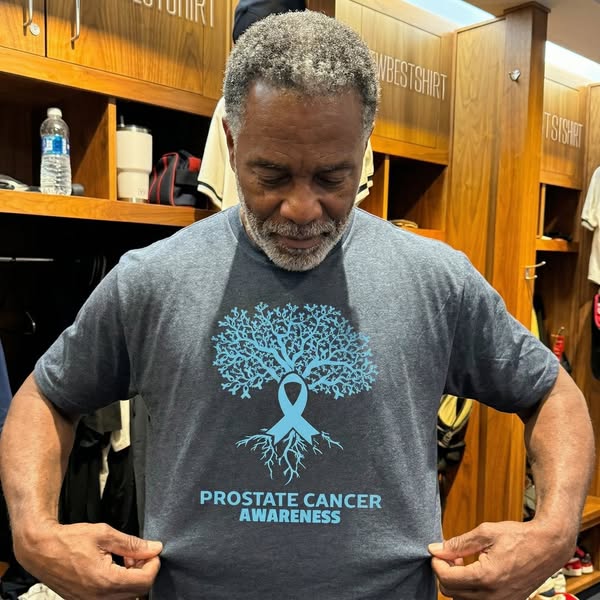
FBIGANMSG
Read This If You Had Prostate Surgery 👆
If You're On Trimix After Prostate Surgery, Read This Before Your Next Shot
I'm 67. I had my prostate removed in May 2024. Gleason 7. Both nerves spared, per my surgeon. I doubt that now.
Thirteen months after surgery, my urologist handed me a vial of Trimix and showed me how to inject myself.
The first night I sat on the edge of our bed shaking. I did it anyway. Ten minutes later I was hard for the first time since the catheter came out.
My wife and I cried that night. Married 39 years. It had been almost a year.
For thirteen months Trimix was my game-changer. Tuesday and Saturday nights. Insulated lunch bag for road trips. Syringes in checked luggage.
Then the bending started. Maybe 15 degrees. Then 30.
Then the bruises stopped fading between shots.
Then I hit a vein and sat in a cold bath at midnight for forty minutes praying it would come down before I had to go to the ER.
Then the dose stopped working.
I went back to my urologist. He examined me, ran his fingers along the shaft, and said two words I've thought about every day since.
"Significant fibrosis."
Scar tissue. Inelastic. Most of an inch of length, gone. The injections had been compounding damage every single shot.
He told me this the way you'd read a weather report. He said "unfortunately" once, looked at his screen, and started typing a referral. He was the man who'd handed me the vial fourteen months earlier and walked me through the technique. There was no acknowledgement of that.
Two weeks later I was sitting across from a surgical specialist looking at a plastic model of an inflatable penile prosthesis. He scheduled me for July 8th. Nine in the morning.
I cancelled it last week.
The reason I cancelled it is the same reason I'm writing this. A man named Walt caught me in a parking lot four days after that consultation and told me what no urologist had ever told me:
The injection wasn't a treatment.
It was an accelerant.
And here's what he said next.
We were standing between our trucks. He pulled out his phone. He had notes.
"Two problems. Not one. The doctors only treat one of them, and they treat it badly."
"Prostate surgery crashes your testosterone. The trauma, the inflammation, the disruption to the whole pelvic axis — it tanks. Mine dropped from 410 to 263 in eight weeks. They won't replace it after prostate cancer because they're worried about feeding any cell they missed. So they ignore it. They let you walk around in half a man's body and they don't tell you that's why you feel the way you feel."
I felt something cold move through my chest. The half-the-man-I-used-to-be feeling I hadn't been able to name. The shell-of-the-guy-I-was thing. The mornings I'd look in the mirror and not recognize the softness around my eyes. I'd put all of that down to the cancer, the surgery, the pills. Walt was telling me there was a number behind it.
"But here's the part that matters for what's happening in your shorts. Testosterone is what keeps the smooth muscle inside your shaft alive. Without it, that tissue dies. Slowly. Quietly. Use it or lose it — that's not just a saying. That's the actual mechanism. The smooth muscle is what holds blood when you get hard. You lose it, you lose the function. Period."
I thought about the inch I'd lost. The softness that had moved in. The fact that I'd stopped looking at myself in the mirror after a shower.
"Second problem. The surgery damages the nerves that signal blood flow. Vessels stop opening on their own. Scar tissue forms inside the chambers. The valves that hold blood inside stop working. That's what they call venous leak. Blood goes in, and then it just runs back out the same way it came."
I nodded. I'd heard that term in the surgical urologist's office. He'd drawn a little diagram on the back of a prescription pad. The drawing looked like a bathtub with the plug pulled.
"Your care team took zero steps to address either one. Mine either. They handed us pills, then a pump, then a needle. Each one missing the mechanism entirely. The pills tried to amplify a signal your nerves can't send. The pump tried to force blood into a chamber that can't hold it. And the needle is the worst of the three. Here's why."
He held up his phone like he was about to show me a picture but didn't.
"Every shot forces blood into vessels that can't trap it. Blood in, blood back out. The tissue takes repeat trauma — needle puncture, three different chemicals expanding the chamber against scar tissue already forming, pressure your body has no way to release. Each injection, more fibrosis. Your testosterone is too low to repair anything between sessions. You weren't treating it. You were running demolition on what you had left."
"That's why the curve appeared. That's why the bruising stopped fading. That's why the dose stopped working."
I felt sick. Sick in the actual physical way — like the floor of the parking lot had tilted. He'd walked me through in five minutes what fourteen months of Trimix had done to my body. What "significant fibrosis" had meant when the man with the prescription pad said it like he was telling me my tire pressure was low.
"And the implant doesn't fix it either. They cut into the chambers, hollow them out, put in two cylinders connected to a pump in your scrotum and a reservoir behind your abdominal wall. Whatever real tissue you have left after all this is destroyed by the procedure itself. The natural function — even the small percentage you might still recover — that's gone the moment they make the first incision. There's no going back from it."
I'd known the surgery was permanent. I hadn't known what permanent actually meant.
"But if you rebuild the foundation — testosterone — and you stop forcing the damage, the tissue you have left can heal. It's not as much as you had before surgery. It might never be. But valves can recover. Smooth muscle can come back. Vessels can start opening again from the inside. The opposite of what Trimix was doing. The opposite of what the implant ends forever."
"How do you know all this?" I asked him.
"My neighbor," he said. "Retired hospital pharmacist named Frank. Twenty-some years on the oncology floor at Cleveland Clinic. He saw a lot of guys like us come through chemo and surgery and end up exactly where we ended up — with urologists who'd run out of options and were funneling everyone toward the same one-way door. I had my own implant scheduled six months ago. Went over the fence with a beer one Sunday and asked him what to do. I cancelled it three weeks later."
"And what did he tell you to take?"
== What Walt's Neighbor Had Him Take ==
"Pharmaceutical-grade Himalayan shilajit. He was a pain in the ass about the details."
He pulled up a photo of a bottle on his phone.
"Had to be high-altitude. Above 16,000 feet. Frank said most of what's on Amazon is harvested down near roads, near farms, in foothills — basically eating soil runoff with heavy metals leached into it. Lead, arsenic, mercury. Stuff you don't want anywhere near a body that's already trying to repair itself. The altitude concentrates what you actually want: trace minerals, fulvic acid. Below 16,000 feet, you're getting dirt with a label on it."
He scrolled to another photo. A certificate from somewhere in Australia.
"Cheap brands heat-process it into gummies and powders, which destroys the active compounds. Has to be water-purified, slow, no solvents, no heat above body temperature. About sixty days of filtration. Most companies skip it because it eats into margin. Frank said you can tell the difference under a mass spec — the cheap stuff has maybe a fifth of the fulvic acid content."
"And the dose. 4,000 milligrams a day. Amazon bottles say 50, 100, sometimes 250 — Frank said you might as well be eating M&M's. He'd seen guys take the bargain stuff for months and show no movement on bloodwork. The therapeutic dose is non-negotiable."
Walt had gone with a brand called Nexora. Third-party tested at a lab in Australia. Every batch. They posted the results.
"The fulvic acid and the 85+ trace minerals feed the system that makes your testosterone. Doesn't replace it like TRT would. Feeds it. Lets your body make its own again. Frank was specific — for prostate cancer survivors, you cannot inject testosterone, but you can support the body's own production. That's the point of feeding the foundation instead of bypassing it."
"And the same compounds support nitric oxide production right there in the vessel walls. Locally. So even if the nerve signal from the pelvic plexus is weak or scrambled, the vessels can start opening from the inside. That's the workaround for the venous leak. You're not waiting for the nerves to come back. You're getting blood flow from a different door."
"Foundation. Mechanics. That's the whole point. One of them without the other is half a job."
He'd been on it 14 weeks. Cancelled his implant six weeks earlier. He showed me his hormone panel from before and after. The before number had a little red flag next to it. The after number didn't.
I went home that night and ordered three bottles. $179.97 for the 90-day supply. About $1.97 a day. Less than a cup of coffee from the gas station down the road from my house. 90-day money-back guarantee. Not on Amazon — Walt was clear about that. Direct from the company.
Ten weeks before they cut me open. If it didn't move the needle, I wasn't out anything I couldn't afford to lose.
== Ten Weeks ==
The first ten days I felt nothing. I started thinking I'd just paid $180 for more expensive disappointment.
Then a Wednesday morning in week two — I woke up at 5:30 without an alarm and lay there trying to figure out what was different. It wasn't anything below the waist. It was that I'd actually slept. All the way through. The 3 a.m. wake-up that had been part of my life since the catheter came out hadn't happened. I felt clear in a way I'd forgotten was a thing.
Some morning during week three — I don't remember which day — I noticed something stirring. A partial. Maybe a third of the way back. Lasted a few minutes and faded. The first sign of anything in twenty-three months that hadn't come from a pill, a pump, or a needle. I sat on the edge of the bed staring at the wall not believing what I'd just felt.
Then nothing for five days.
Then two mornings in a row in week four. Then nothing again.
The chaos of it was the part I hadn't expected. I'd assumed if it worked, it would work like a dial — turn it up by half a percent each week. Instead it came in waves. A morning of something. Three days of nothing. A surprise on a Tuesday afternoon when I wasn't thinking about it. My body was doing things on a schedule it hadn't run on in two years and I had no control over the timing.
Week five — my wife reached for me one Saturday morning in a way she hadn't in over a year. I got to about 55% with stimulation. Couldn't finish, but I didn't lose it either. Held her for an hour after. We didn't talk about what had just happened. Didn't have to. Even that was a victory I hadn't dared imagine.
Week six I woke up hard three mornings out of seven. Real hard. The kind I used to wake up with in my forties without thinking about it. I'd lie there for a minute just to confirm what I was feeling was actually happening.
By week eight it was full rigidity. Straight. No curve. No pain on either side. The first normal erection in two years that I hadn't forced into existence with a chemical or a vacuum. I checked my own body the way you'd check a car after a long repair — does the steering still pull, is there any noise from the bearing. There wasn't. It just worked.
Week nine, we slept together for the first time without injecting. It worked. Not chemistry. Not equipment. Me.
I lay there afterward staring at the ceiling, and I'm not sure I've ever felt anything quite like it. Not joy exactly. Something quieter. Like getting a piece of yourself back you'd given up for gone. The shell of the guy I used to be — Walt's phrase, my reality — had walked back inside the house and sat down at the kitchen table.
== The Phone Call ==
Wednesday last week. I'd been to the hardware store for a new bathroom faucet — the old one had been dripping for two months and I'd kept putting it off the way I'd been putting off everything else. I sat in my truck in the parking lot with the bag on the passenger seat. The surgery date was in my phone calendar. July 8th. 7:00 a.m. arrival. NPO after midnight. The reminder had been pinging me for weeks.
I scrolled to the surgeon's office number and called.
I told the woman at the front desk I wanted to cancel the procedure scheduled for July 8th.
She asked if I wanted to reschedule.
I said no.
She paused — they get told no for that procedure roughly never — and asked if I'd discussed it with my urologist. I said I hadn't, and that I wasn't going to. She read me a paragraph about cancellation policy. I said I understood. We hung up.
I sat in the truck for a few minutes afterward with my hand on the gearshift. Outside, two guys in the next row over were loading a sheet of plywood into the back of a Tahoe. Normal Wednesday. The world kept doing what it had been doing while my life had been on hold.
I drove home.
I didn't tell my wife that day. I told her over dinner on Friday — pork chops, the green beans she does with the almonds. I told her I'd cancelled the July 8th procedure. I told her why. She listened all the way through, set her fork down on the edge of her plate, squeezed my hand once, and said, "I knew you'd find another way."
We kept eating. The radio was on low in the kitchen. After a few minutes she said the green beans had gotten cold and got up to put them back in the pan, and I watched her stand at the stove the way I'd watched her stand at the stove for thirty-nine years, and I thought: I am sitting at this table as the man she married, not the half-man we'd both been pretending was good enough.
== If You're Where I Was ==
If your urologist has put a date on a calendar for an implant — read this part carefully.
That surgery is a one-way door. Once those cylinders go in, the natural tissue you have left is destroyed by the procedure itself. Whatever your body could have done on its own — even after Trimix, even after fibrosis — is gone the moment they make the first incision. There is no version of the next twenty years where you find out what that other path would have looked like.
That doesn't mean don't ever do it. It means: before you submit to that, make sure you've actually addressed both of the problems your body is dealing with. Most men never do. Most men don't even know there are two problems, because nobody told them. I didn't know until a man cornered me in a parking lot.
Every week you stay on injections, the fibrosis gets worse. Every week the dose stops working a little more. Every week the calendar moves closer to the date the surgical specialist circled. The window doesn't close all at once — it closes a little each day, and then one morning you're inside an OR and the choice doesn't exist anymore.
The kind I take is Nexora. Sourced above 16,000 feet. 60-day water purification. Third-party tested in the United States. 4,000mg therapeutic dose. About $1.93 a day on the 90-day pack. 90-day money-back guarantee. Not on Amazon.
I'm not affiliated with them. I'm a 67-year-old man who was scheduled for an implant and isn't anymore.
== What I'd Tell You If We Were Standing In A Parking Lot ==
1. The implant is permanent. Once those cylinders go in, the natural tissue you have left is destroyed by the procedure itself. One-way door. Whatever recovery your body might still be capable of — gone in the first ten minutes of the surgery.
2. Pills can't fix nerve damage. Viagra and Cialis amplify a signal your nerves can't send anymore. There's nothing for them to amplify. That's why they stopped working. It wasn't your fault.
3. Trimix isn't a treatment. It's an accelerant. Every injection forces blood through compromised tissue and adds repeat trauma your low testosterone can't repair. Each shot, more fibrosis. Each shot, less length, more curve, more bruising.
4. Prostate surgery crashes testosterone, and nobody addresses it. They won't replace it — they're worried about feeding cancer cells. So they leave the foundation broken. Without that foundation, the tissue can't repair, the muscle can't stay healthy, and the vessels can't function. You can't fix anything downstream until you fix this.
5. The two problems have to be fixed together. Testosterone foundation. Local nitric oxide support inside the vessel walls. One without the other is half a job. The supplement has to do both.
6. The window is closing, but it isn't closed. Most men hit a point in the second year where the medical system tells them they're out of options. That's not the same as being out of options. That's the medical system being out of options it knows how to bill for.
Every week you wait, the fibrosis is still working. The clock the urologist started fourteen months ago is still running. The man on the other side of the implant is not the man you were before surgery — he doesn't get to find out what was still possible.
I'm not telling you what to do. I'm telling you what I did.
I cancelled the surgery.
And the bathroom faucet still needs to be installed.
Here is the link to their website: https://www.storenexora.com/products/10-in-1-alpha-shilajit-gummies
Shop now
See full ad →
Started10 May 2026
Running for15d
FBIGANMSG
Read This If You Had Prostate Surgery 👆
If You're On Trimix After Prostate Surgery, Read This Before Your Next Shot
I'm 67. I had my prostate removed in May 2024. Gleason 7. Both nerves spared, per my surgeon. I doubt that now.
Thirteen months after surgery, my urologist handed me a vial of Trimix and showed me how to inject myself.
The first night I sat on the edge of our bed shaking. I did it anyway. Ten minutes later I was hard for the first time since the catheter came out.
My wife and I cried that night. Married 39 years. It had been almost a year.
For thirteen months Trimix was my game-changer. Tuesday and Saturday nights. Insulated lunch bag for road trips. Syringes in checked luggage.
Then the bending started. Maybe 15 degrees. Then 30.
Then the bruises stopped fading between shots.
Then I hit a vein and sat in a cold bath at midnight for forty minutes praying it would come down before I had to go to the ER.
Then the dose stopped working.
I went back to my urologist. He examined me, ran his fingers along the shaft, and said two words I've thought about every day since.
"Significant fibrosis."
Scar tissue. Inelastic. Most of an inch of length, gone. The injections had been compounding damage every single shot.
He told me this the way you'd read a weather report. He said "unfortunately" once, looked at his screen, and started typing a referral. He was the man who'd handed me the vial fourteen months earlier and walked me through the technique. There was no acknowledgement of that.
Two weeks later I was sitting across from a surgical specialist looking at a plastic model of an inflatable penile prosthesis. He scheduled me for July 8th. Nine in the morning.
I cancelled it last week.
The reason I cancelled it is the same reason I'm writing this. A man named Walt caught me in a parking lot four days after that consultation and told me what no urologist had ever told me:
The injection wasn't a treatment.
It was an accelerant.
And here's what he said next.
We were standing between our trucks. He pulled out his phone. He had notes.
"Two problems. Not one. The doctors only treat one of them, and they treat it badly."
"Prostate surgery crashes your testosterone. The trauma, the inflammation, the disruption to the whole pelvic axis — it tanks. Mine dropped from 410 to 263 in eight weeks. They won't replace it after prostate cancer because they're worried about feeding any cell they missed. So they ignore it. They let you walk around in half a man's body and they don't tell you that's why you feel the way you feel."
I felt something cold move through my chest. The half-the-man-I-used-to-be feeling I hadn't been able to name. The shell-of-the-guy-I-was thing. The mornings I'd look in the mirror and not recognize the softness around my eyes. I'd put all of that down to the cancer, the surgery, the pills. Walt was telling me there was a number behind it.
"But here's the part that matters for what's happening in your shorts. Testosterone is what keeps the smooth muscle inside your shaft alive. Without it, that tissue dies. Slowly. Quietly. Use it or lose it — that's not just a saying. That's the actual mechanism. The smooth muscle is what holds blood when you get hard. You lose it, you lose the function. Period."
I thought about the inch I'd lost. The softness that had moved in. The fact that I'd stopped looking at myself in the mirror after a shower.
"Second problem. The surgery damages the nerves that signal blood flow. Vessels stop opening on their own. Scar tissue forms inside the chambers. The valves that hold blood inside stop working. That's what they call venous leak. Blood goes in, and then it just runs back out the same way it came."
I nodded. I'd heard that term in the surgical urologist's office. He'd drawn a little diagram on the back of a prescription pad. The drawing looked like a bathtub with the plug pulled.
"Your care team took zero steps to address either one. Mine either. They handed us pills, then a pump, then a needle. Each one missing the mechanism entirely. The pills tried to amplify a signal your nerves can't send. The pump tried to force blood into a chamber that can't hold it. And the needle is the worst of the three. Here's why."
He held up his phone like he was about to show me a picture but didn't.
"Every shot forces blood into vessels that can't trap it. Blood in, blood back out. The tissue takes repeat trauma — needle puncture, three different chemicals expanding the chamber against scar tissue already forming, pressure your body has no way to release. Each injection, more fibrosis. Your testosterone is too low to repair anything between sessions. You weren't treating it. You were running demolition on what you had left."
"That's why the curve appeared. That's why the bruising stopped fading. That's why the dose stopped working."
I felt sick. Sick in the actual physical way — like the floor of the parking lot had tilted. He'd walked me through in five minutes what fourteen months of Trimix had done to my body. What "significant fibrosis" had meant when the man with the prescription pad said it like he was telling me my tire pressure was low.
"And the implant doesn't fix it either. They cut into the chambers, hollow them out, put in two cylinders connected to a pump in your scrotum and a reservoir behind your abdominal wall. Whatever real tissue you have left after all this is destroyed by the procedure itself. The natural function — even the small percentage you might still recover — that's gone the moment they make the first incision. There's no going back from it."
I'd known the surgery was permanent. I hadn't known what permanent actually meant.
"But if you rebuild the foundation — testosterone — and you stop forcing the damage, the tissue you have left can heal. It's not as much as you had before surgery. It might never be. But valves can recover. Smooth muscle can come back. Vessels can start opening again from the inside. The opposite of what Trimix was doing. The opposite of what the implant ends forever."
"How do you know all this?" I asked him.
"My neighbor," he said. "Retired hospital pharmacist named Frank. Twenty-some years on the oncology floor at Cleveland Clinic. He saw a lot of guys like us come through chemo and surgery and end up exactly where we ended up — with urologists who'd run out of options and were funneling everyone toward the same one-way door. I had my own implant scheduled six months ago. Went over the fence with a beer one Sunday and asked him what to do. I cancelled it three weeks later."
"And what did he tell you to take?"
== What Walt's Neighbor Had Him Take ==
"Pharmaceutical-grade Himalayan shilajit. He was a pain in the ass about the details."
He pulled up a photo of a bottle on his phone.
"Had to be high-altitude. Above 16,000 feet. Frank said most of what's on Amazon is harvested down near roads, near farms, in foothills — basically eating soil runoff with heavy metals leached into it. Lead, arsenic, mercury. Stuff you don't want anywhere near a body that's already trying to repair itself. The altitude concentrates what you actually want: trace minerals, fulvic acid. Below 16,000 feet, you're getting dirt with a label on it."
He scrolled to another photo. A certificate from somewhere in Australia.
"Cheap brands heat-process it into gummies and powders, which destroys the active compounds. Has to be water-purified, slow, no solvents, no heat above body temperature. About sixty days of filtration. Most companies skip it because it eats into margin. Frank said you can tell the difference under a mass spec — the cheap stuff has maybe a fifth of the fulvic acid content."
"And the dose. 4,000 milligrams a day. Amazon bottles say 50, 100, sometimes 250 — Frank said you might as well be eating M&M's. He'd seen guys take the bargain stuff for months and show no movement on bloodwork. The therapeutic dose is non-negotiable."
Walt had gone with a brand called Nexora. Third-party tested at a lab in Australia. Every batch. They posted the results.
"The fulvic acid and the 85+ trace minerals feed the system that makes your testosterone. Doesn't replace it like TRT would. Feeds it. Lets your body make its own again. Frank was specific — for prostate cancer survivors, you cannot inject testosterone, but you can support the body's own production. That's the point of feeding the foundation instead of bypassing it."
"And the same compounds support nitric oxide production right there in the vessel walls. Locally. So even if the nerve signal from the pelvic plexus is weak or scrambled, the vessels can start opening from the inside. That's the workaround for the venous leak. You're not waiting for the nerves to come back. You're getting blood flow from a different door."
"Foundation. Mechanics. That's the whole point. One of them without the other is half a job."
He'd been on it 14 weeks. Cancelled his implant six weeks earlier. He showed me his hormone panel from before and after. The before number had a little red flag next to it. The after number didn't.
I went home that night and ordered three bottles. $179.97 for the 90-day supply. About $1.97 a day. Less than a cup of coffee from the gas station down the road from my house. 90-day money-back guarantee. Not on Amazon — Walt was clear about that. Direct from the company.
Ten weeks before they cut me open. If it didn't move the needle, I wasn't out anything I couldn't afford to lose.
== Ten Weeks ==
The first ten days I felt nothing. I started thinking I'd just paid $180 for more expensive disappointment.
Then a Wednesday morning in week two — I woke up at 5:30 without an alarm and lay there trying to figure out what was different. It wasn't anything below the waist. It was that I'd actually slept. All the way through. The 3 a.m. wake-up that had been part of my life since the catheter came out hadn't happened. I felt clear in a way I'd forgotten was a thing.
Some morning during week three — I don't remember which day — I noticed something stirring. A partial. Maybe a third of the way back. Lasted a few minutes and faded. The first sign of anything in twenty-three months that hadn't come from a pill, a pump, or a needle. I sat on the edge of the bed staring at the wall not believing what I'd just felt.
Then nothing for five days.
Then two mornings in a row in week four. Then nothing again.
The chaos of it was the part I hadn't expected. I'd assumed if it worked, it would work like a dial — turn it up by half a percent each week. Instead it came in waves. A morning of something. Three days of nothing. A surprise on a Tuesday afternoon when I wasn't thinking about it. My body was doing things on a schedule it hadn't run on in two years and I had no control over the timing.
Week five — my wife reached for me one Saturday morning in a way she hadn't in over a year. I got to about 55% with stimulation. Couldn't finish, but I didn't lose it either. Held her for an hour after. We didn't talk about what had just happened. Didn't have to. Even that was a victory I hadn't dared imagine.
Week six I woke up hard three mornings out of seven. Real hard. The kind I used to wake up with in my forties without thinking about it. I'd lie there for a minute just to confirm what I was feeling was actually happening.
By week eight it was full rigidity. Straight. No curve. No pain on either side. The first normal erection in two years that I hadn't forced into existence with a chemical or a vacuum. I checked my own body the way you'd check a car after a long repair — does the steering still pull, is there any noise from the bearing. There wasn't. It just worked.
Week nine, we slept together for the first time without injecting. It worked. Not chemistry. Not equipment. Me.
I lay there afterward staring at the ceiling, and I'm not sure I've ever felt anything quite like it. Not joy exactly. Something quieter. Like getting a piece of yourself back you'd given up for gone. The shell of the guy I used to be — Walt's phrase, my reality — had walked back inside the house and sat down at the kitchen table.
== The Phone Call ==
Wednesday last week. I'd been to the hardware store for a new bathroom faucet — the old one had been dripping for two months and I'd kept putting it off the way I'd been putting off everything else. I sat in my truck in the parking lot with the bag on the passenger seat. The surgery date was in my phone calendar. July 8th. 7:00 a.m. arrival. NPO after midnight. The reminder had been pinging me for weeks.
I scrolled to the surgeon's office number and called.
I told the woman at the front desk I wanted to cancel the procedure scheduled for July 8th.
She asked if I wanted to reschedule.
I said no.
She paused — they get told no for that procedure roughly never — and asked if I'd discussed it with my urologist. I said I hadn't, and that I wasn't going to. She read me a paragraph about cancellation policy. I said I understood. We hung up.
I sat in the truck for a few minutes afterward with my hand on the gearshift. Outside, two guys in the next row over were loading a sheet of plywood into the back of a Tahoe. Normal Wednesday. The world kept doing what it had been doing while my life had been on hold.
I drove home.
I didn't tell my wife that day. I told her over dinner on Friday — pork chops, the green beans she does with the almonds. I told her I'd cancelled the July 8th procedure. I told her why. She listened all the way through, set her fork down on the edge of her plate, squeezed my hand once, and said, "I knew you'd find another way."
We kept eating. The radio was on low in the kitchen. After a few minutes she said the green beans had gotten cold and got up to put them back in the pan, and I watched her stand at the stove the way I'd watched her stand at the stove for thirty-nine years, and I thought: I am sitting at this table as the man she married, not the half-man we'd both been pretending was good enough.
== If You're Where I Was ==
If your urologist has put a date on a calendar for an implant — read this part carefully.
That surgery is a one-way door. Once those cylinders go in, the natural tissue you have left is destroyed by the procedure itself. Whatever your body could have done on its own — even after Trimix, even after fibrosis — is gone the moment they make the first incision. There is no version of the next twenty years where you find out what that other path would have looked like.
That doesn't mean don't ever do it. It means: before you submit to that, make sure you've actually addressed both of the problems your body is dealing with. Most men never do. Most men don't even know there are two problems, because nobody told them. I didn't know until a man cornered me in a parking lot.
Every week you stay on injections, the fibrosis gets worse. Every week the dose stops working a little more. Every week the calendar moves closer to the date the surgical specialist circled. The window doesn't close all at once — it closes a little each day, and then one morning you're inside an OR and the choice doesn't exist anymore.
The kind I take is Nexora. Sourced above 16,000 feet. 60-day water purification. Third-party tested in the United States. 4,000mg therapeutic dose. About $1.93 a day on the 90-day pack. 90-day money-back guarantee. Not on Amazon.
I'm not affiliated with them. I'm a 67-year-old man who was scheduled for an implant and isn't anymore.
== What I'd Tell You If We Were Standing In A Parking Lot ==
1. The implant is permanent. Once those cylinders go in, the natural tissue you have left is destroyed by the procedure itself. One-way door. Whatever recovery your body might still be capable of — gone in the first ten minutes of the surgery.
2. Pills can't fix nerve damage. Viagra and Cialis amplify a signal your nerves can't send anymore. There's nothing for them to amplify. That's why they stopped working. It wasn't your fault.
3. Trimix isn't a treatment. It's an accelerant. Every injection forces blood through compromised tissue and adds repeat trauma your low testosterone can't repair. Each shot, more fibrosis. Each shot, less length, more curve, more bruising.
4. Prostate surgery crashes testosterone, and nobody addresses it. They won't replace it — they're worried about feeding cancer cells. So they leave the foundation broken. Without that foundation, the tissue can't repair, the muscle can't stay healthy, and the vessels can't function. You can't fix anything downstream until you fix this.
5. The two problems have to be fixed together. Testosterone foundation. Local nitric oxide support inside the vessel walls. One without the other is half a job. The supplement has to do both.
6. The window is closing, but it isn't closed. Most men hit a point in the second year where the medical system tells them they're out of options. That's not the same as being out of options. That's the medical system being out of options it knows how to bill for.
Every week you wait, the fibrosis is still working. The clock the urologist started fourteen months ago is still running. The man on the other side of the implant is not the man you were before surgery — he doesn't get to find out what was still possible.
I'm not telling you what to do. I'm telling you what I did.
I cancelled the surgery.
And the bathroom faucet still needs to be installed.
Here is the link to their website: https://www.storenexora.com/products/10-in-1-alpha-shilajit-gummies
Shop now
See full ad →
Started10 May 2026
Running for15d

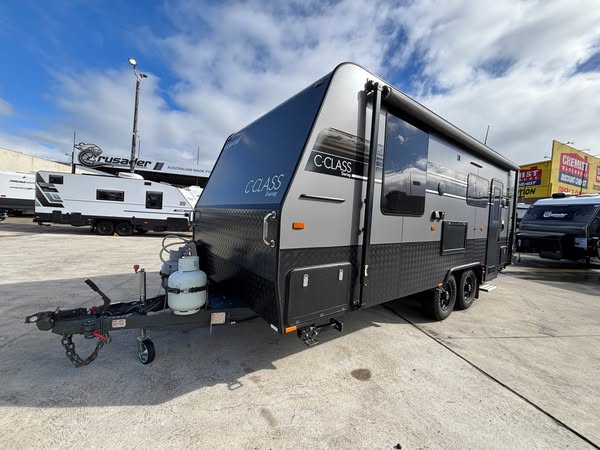
FBIGANMSG
2022 Essential c-class tourer 19'6"
2022 ESSENTIAL CARAVANS | C-CLASS TOURER | LOADED, SERVICED AND READY TO HIT THE ROAD
Built in May 2022 and presented in extremely good condition, this 19'6" Crusader Essential C-Class Tourer is a genuinely impressive package for any buyer looking to start their touring life without compromise. Recently serviced and with all appliances confirmed working, this van is ready to hitch and go from day one. If you have been looking for a well-equipped first-time tourer that punches well above its class, this is the one to look at.
---
KEY DETAILS
• Model: 2022 Crusader Essential C-Class Tourer
• Date of Build: May 2022
• Condition: Very Good
• Layout: 19'6" caravan with queen bed, separate shower/toilet ensuite
• Tare: 2,294kg | ATM: 2,724kg | Ball Weight: 147kg | GTM: 2,577kg | Payload: 430kg+
---
FEATURES AND SPECIFICATIONS
• Queen-size bed with quality furniture and fixtures throughout
• Separate shower and toilet ensuite with ceramic Dometic toilet
• 170L two-door Dometic three-way fridge for full-time living capability
• Recessed cooktop, grill and oven for proper home-style cooking on the road
• NCE top-loading washing machine - laundry sorted wherever you park
• IBIS 4 reverse-cycle air conditioner for year-round comfort
• Microwave for quick and easy meal prep
• Diesel heater for cold nights and shoulder season touring
• 170W solar panel with AGM battery for off-grid capability
• Trek3 BMS BMPRO battery management system - lithium-ready for future upgrades
• 600W inverter for running small appliances from battery
• Wireless charging and ample 240V/12V power points throughout
• Strip lighting throughout the van with quality fittings and finishes
• Full Aussie Traveller roll-out awning for outdoor living
• 15" x 235 AT tyres suited to touring use
• Leaf spring touring suspension for a stable and comfortable tow
• High-rise checkerplate and smooth-side cladding for a tough, clean exterior
• DO35 coupling with pin for secure connection
• Rear wall bike rack accommodating two bikes
• Two x 9kg gas bottles for extended cooking and heating
• Pull-out pantry for smart, accessible storage
• Hoses, power lead and sullage hose included
• Handover included in purchase - walk through every system before you drive away
---
PEACE OF MIND
• Recently serviced and inspected - presented in excellent mechanical and cosmetic condition
• All appliances confirmed working and operational at time of listing
• BMPRO Trek3 battery management system fitted - lithium upgrade ready when you want it
• 430kg+ of payload offers genuine flexibility for serious touring gear and personal belongings
• Handover with the purchase means you leave knowing exactly how everything works - no guesswork
---
WHY THIS VAN?
The Essential C-Class Tourer is a practical, well-thought-out layout designed for couples and first-time tourers who want real features without unnecessary complexity. This particular example stands out for the quality and volume of its inclusions - diesel heater, washing machine, BMPRO system, IBIS 4 air conditioning and a solar setup that gives you genuine off-grid potential from day one. Buy with confidence, complete the handover, and drive away ready for your first adventure without spending another dollar.
---
Van located in Campbellfield VIC. Inspections welcome.
Learn more about this listing on Facebook Marketplace: https://facebook.com/marketplace/item/1377230807880421/
Contact us
See full ad →
Started18 May 2026
Running for7d

Video
FBIGMSGTH
No Toxins, No Plastics, Just Titanium
“As a doctor, I’ve seen firsthand how something as simple as food prep can land people in the hospital.”
The truth is, most people don’t realize just how dangerous their cutting board really is. I’ve treated patients for foodborne illnesses caused by bacteria like salmonella and E. coli - and it often starts with wood or plastic boards that trap germs in tiny grooves you can’t see. No matter how hard you scrub, the bacteria never fully goes away. Add in the microplastics that shed off plastic boards, and it’s a problem that builds up meal after meal.
That’s why I personally switched to the Apex Titanium Cutting Board. It’s non-porous, which means bacteria has nowhere to hide, and it doesn’t shed harmful particles into your food. Just a quick rinse and it’s completely clean again. As a medical professional, I trust titanium because it’s the same kind of hygienic, non-reactive material we use in surgical tools.
Now when I prepare food for my family, I don’t second-guess what’s hiding in the board beneath my knife. The Apex Titanium board gives me complete confidence that what I’m feeding my family is safe. I don’t worry about cross-contamination, lingering odors, or having to replace another warped wooden or plastic board.
If you care about your health and especially the health of your kids or older family members, upgrading your cutting board isn’t just a kitchen choice, it’s a health decision. This is the only board I’ll ever use or recommend.
Shop now
See full ad →
Started15 May 2026
Running for10d
Video
FBIGMSGTH
LAST CHANCE - 70% OFF
Stop Prepping on Bacteria-Traps – Upgrade Your Board Today.
With 1,800+ ⭐️⭐️⭐️⭐️⭐️ reviews and trusted by over 27,000 home chefs, the Apex Titanium Cutting Board is the last board you’ll ever need.
🔪 Built to Last a Lifetime
🔪 100% Plastic-Free & Family-Safe
🔪 Knife-Friendly Surface
🔪 No Bacteria Buildup or Lingering Odors
🔪 Non-Porous. Dishwasher-Safe. Stress-Free.
Meal prep just got cleaner, safer, and smarter.
⏳ FINAL DAY – 70% Off Easter Sale Ends Tonight!
Shop now
See full ad →
Started13 May 2026
Running for12d

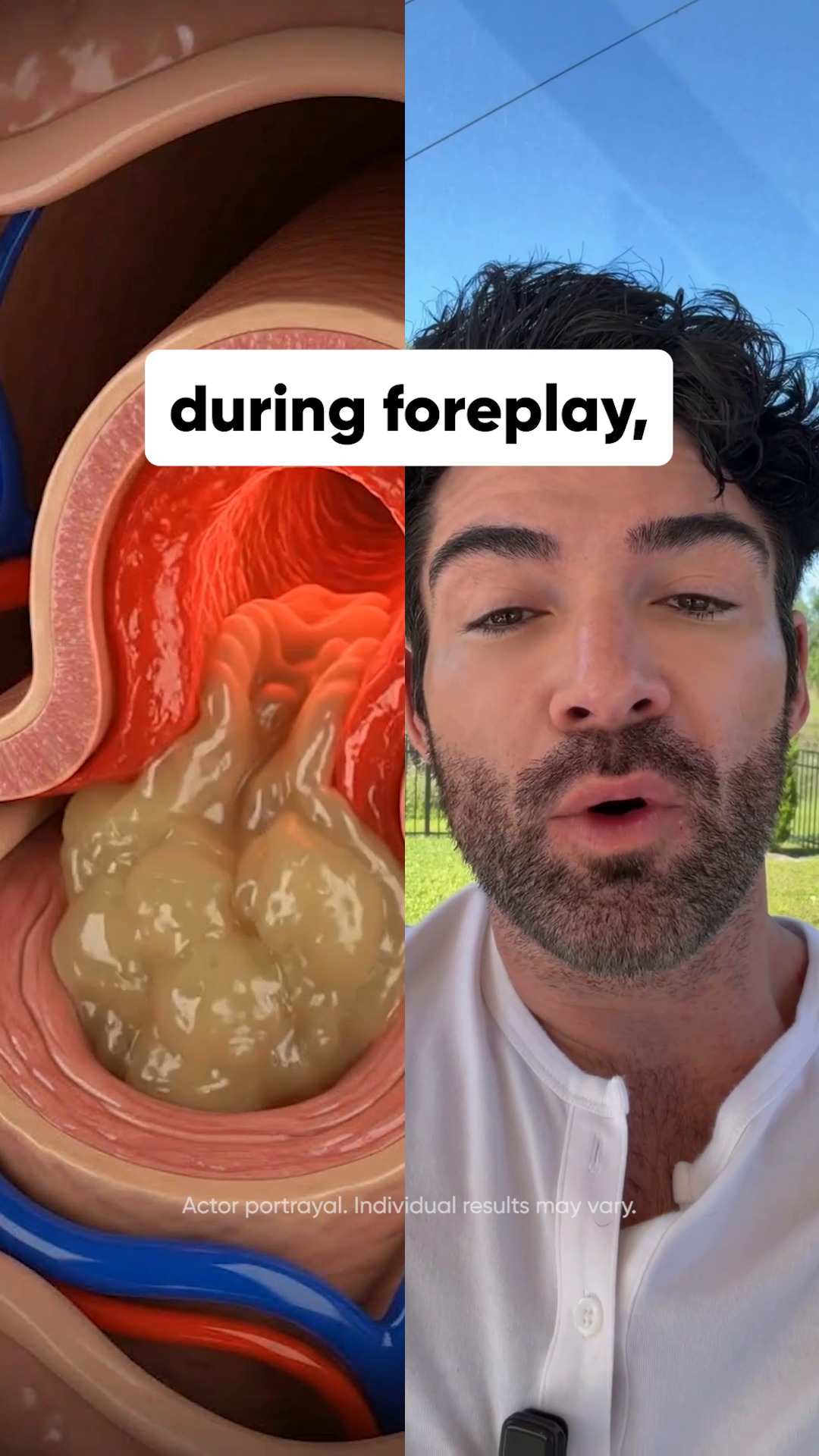
Video
FBIGANMSG
⭐⭐⭐⭐⭐ (4.7/5.0)
45% of men experience PE.
It can be fixed without pills.
This plan helps you take control of your body and mind.
1. Take a 3-min quiz
2. Get a personalized program
3. Achieve long-term results without pills
Learn more
See full ad →
Started24 May 2026
Running for1d
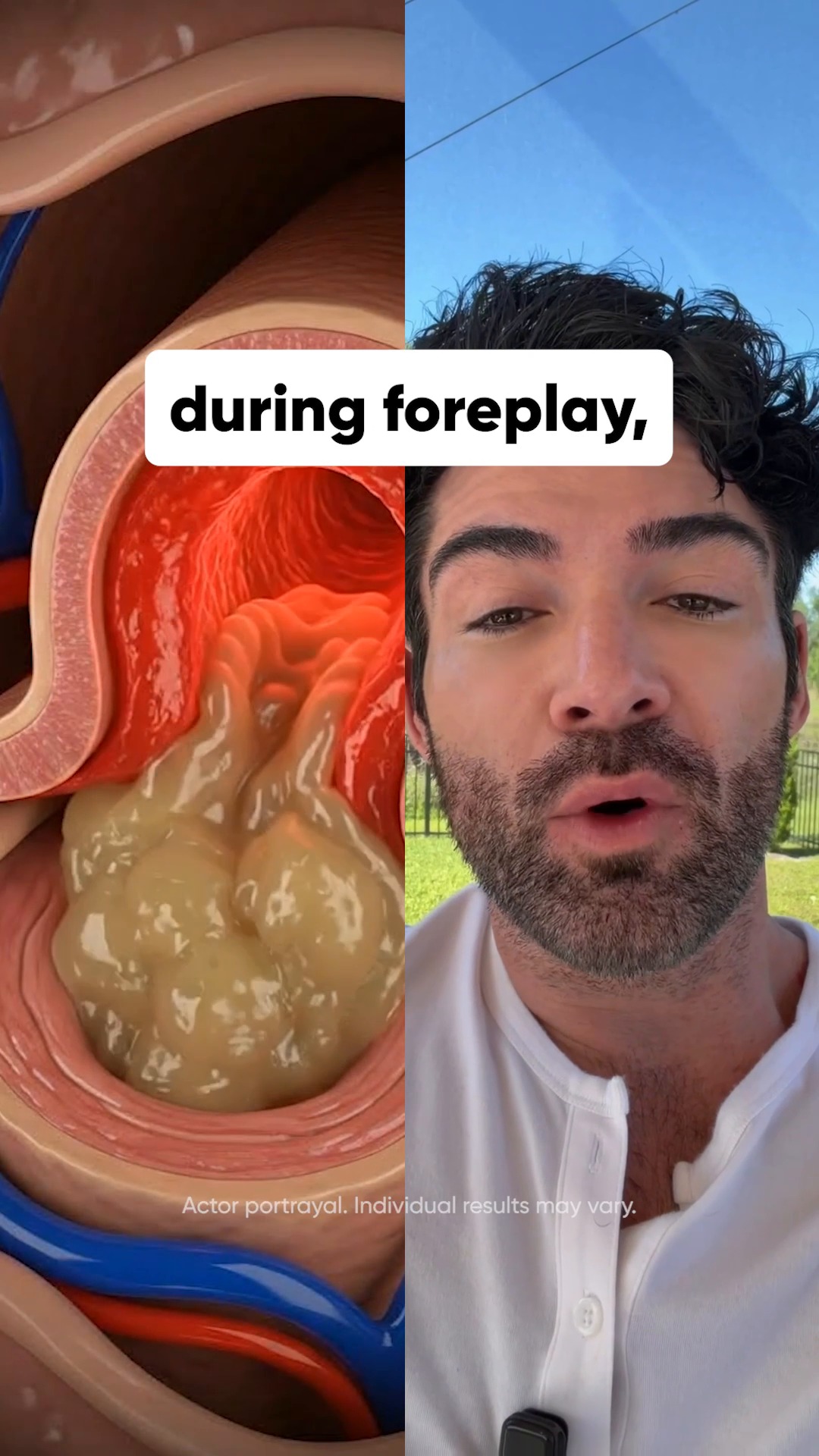
Video
FBIGANMSG
⭐⭐⭐⭐⭐ (4.7/5.0)
45% of men experience PE.
It can be fixed without pills.
This plan helps you take control of your body and mind.
1. Take a 3-min quiz
2. Get a personalized program
3. Achieve long-term results without pills
Learn more
See full ad →
Started24 May 2026
Running for1d
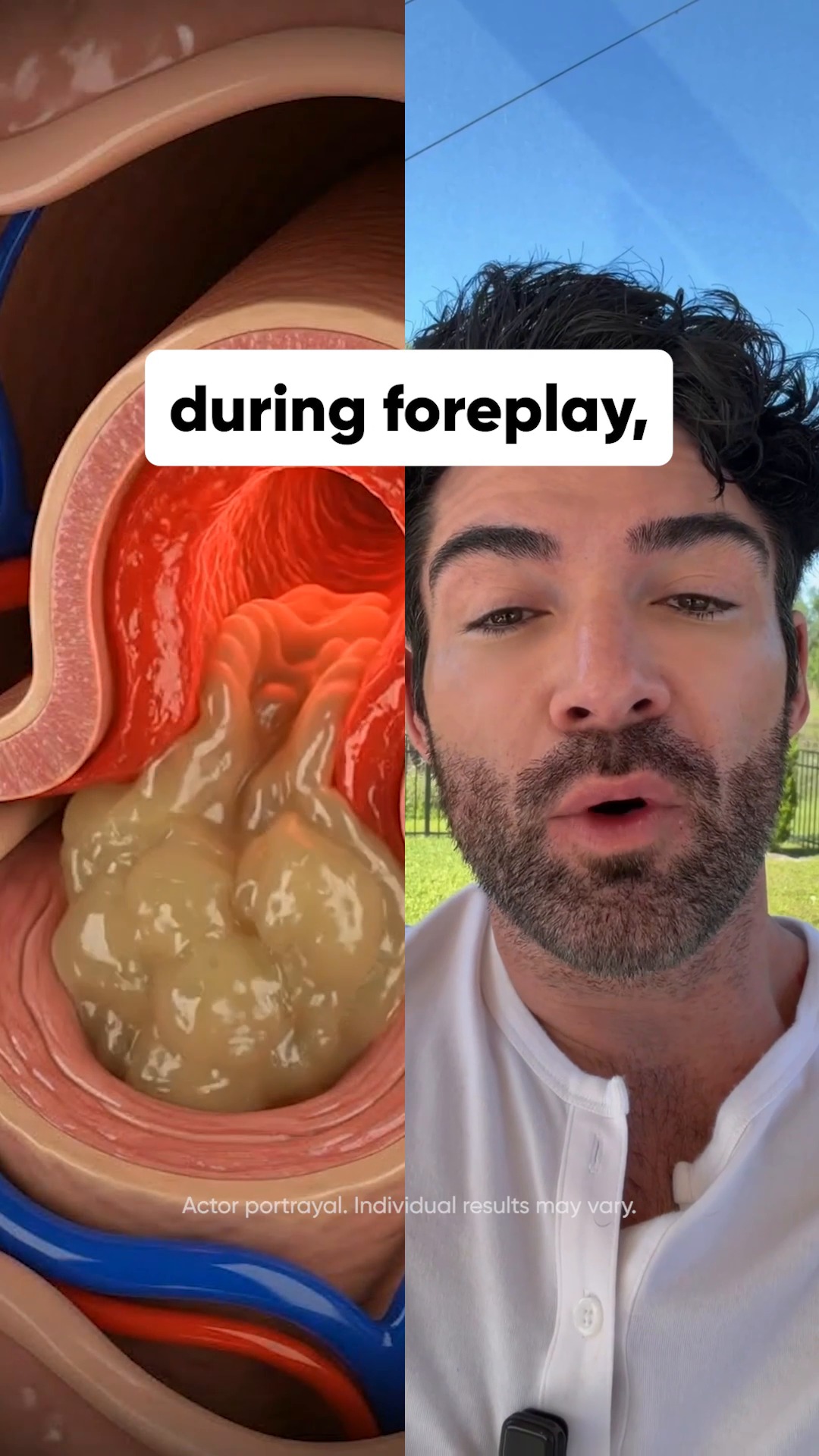
Video
FBIGANMSG
⭐⭐⭐⭐⭐ (4.7/5.0)
45% of men experience PE.
It can be fixed without pills.
This plan helps you take control of your body and mind.
1. Take a 3-min quiz
2. Get a personalized program
3. Achieve long-term results without pills
Learn more
See full ad →
Started24 May 2026
Running for1d
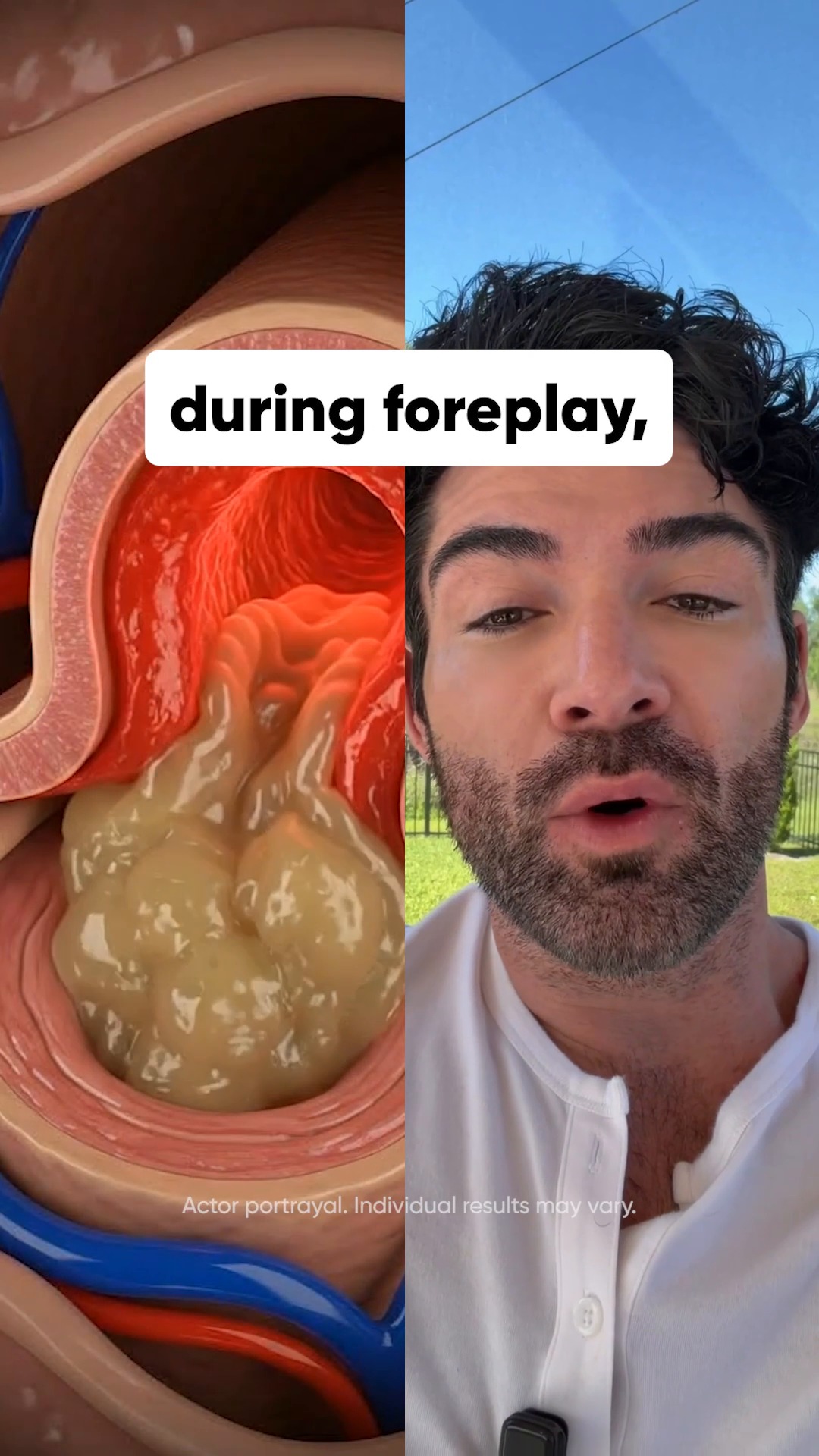
Video
FBIGANMSG
⭐⭐⭐⭐⭐ (4.7/5.0)
45% of men experience PE.
It can be fixed without pills.
This plan helps you take control of your body and mind.
1. Take a 3-min quiz
2. Get a personalized program
3. Achieve long-term results without pills
Learn more
See full ad →
Started24 May 2026
Running for1d
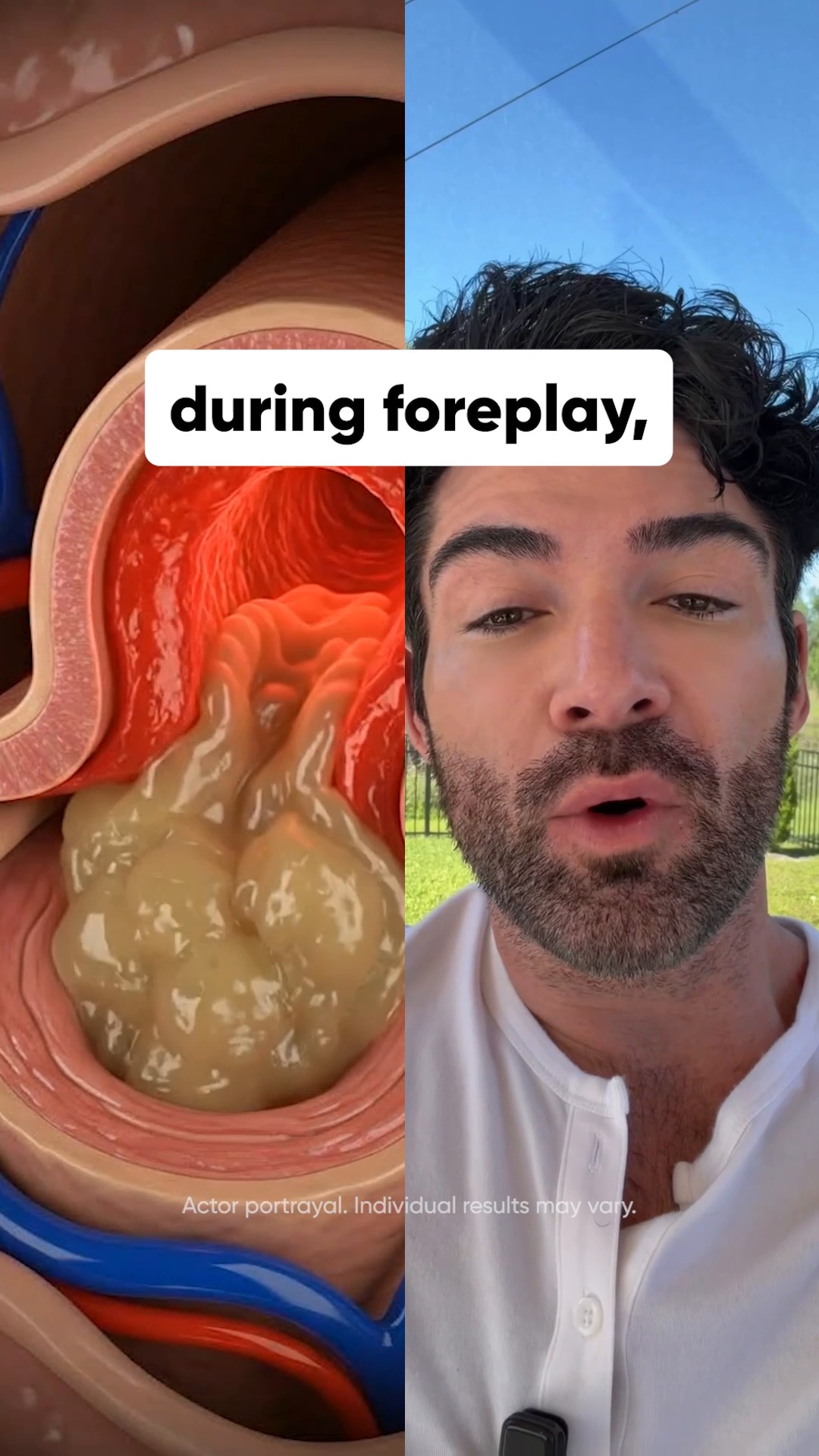
Video
FBIGANMSG
⭐⭐⭐⭐⭐ (4.7/5.0)
45% of men experience PE.
It can be fixed without pills.
This plan helps you take control of your body and mind.
1. Take a 3-min quiz
2. Get a personalized program
3. Achieve long-term results without pills
Learn more
See full ad →
Started24 May 2026
Running for1d
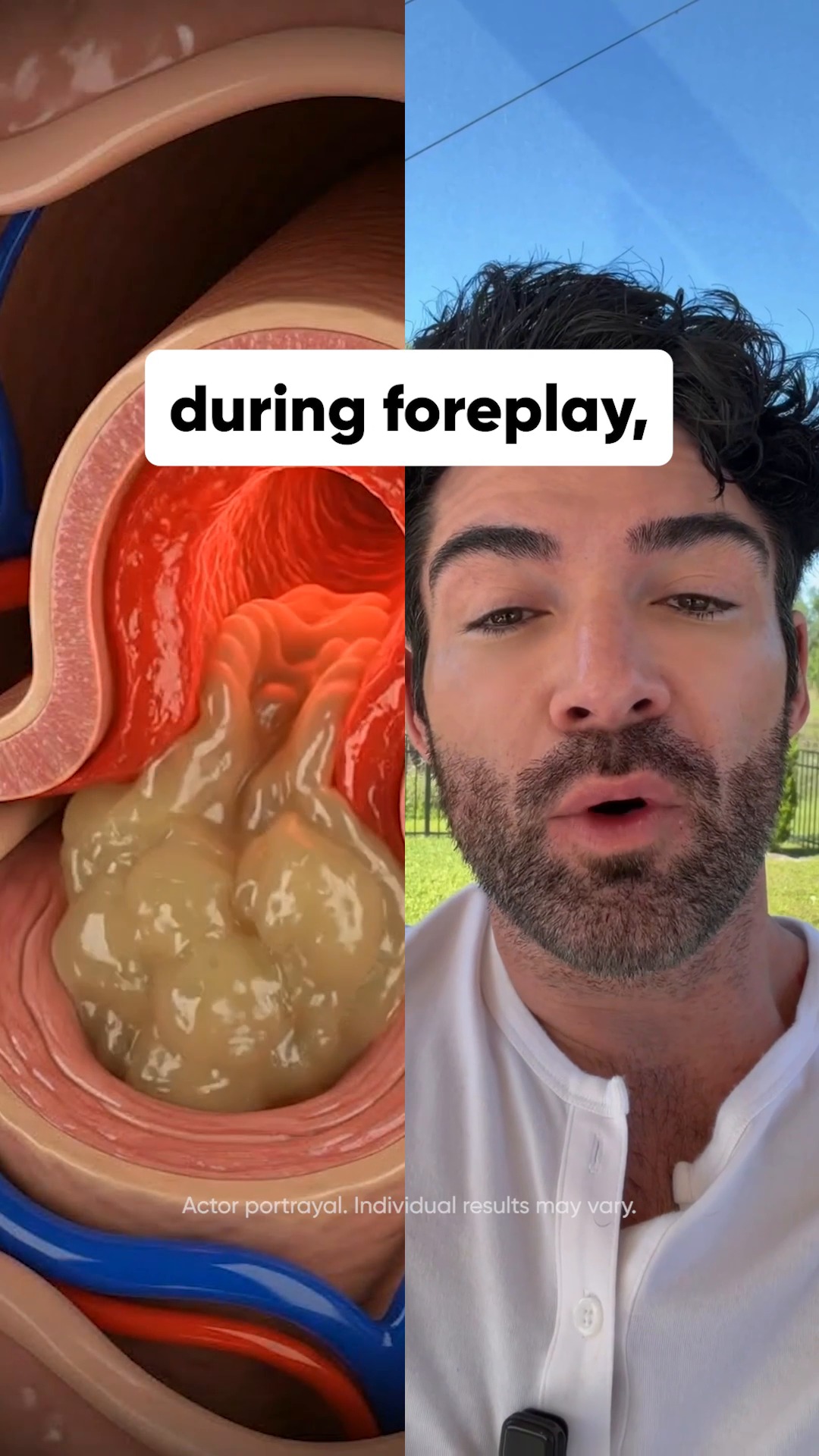
Video
FBIGANMSG
⭐⭐⭐⭐⭐ (4.7/5.0)
Low energy when it comes to intimacy. Can't focus or follow through. Zero motivation and "drive" in bed. Always tired, even after a full night's sleep.
You keep saying, "I'll fix it someday." But weeks go by... and nothing changes.
A friend told me about the Relatio app. I was skeptical at first, but this app was different.
I took Relatio's 3-minute quiz, which helped me understand what was draining my testosterone and sexual "drive."
Now, I'm just... better. More energy, confidence, stamina, a stable “mood” in bed, and I feel like myself again.
Just tap below and try it now.
Learn more
See full ad →
Started24 May 2026
Running for1d
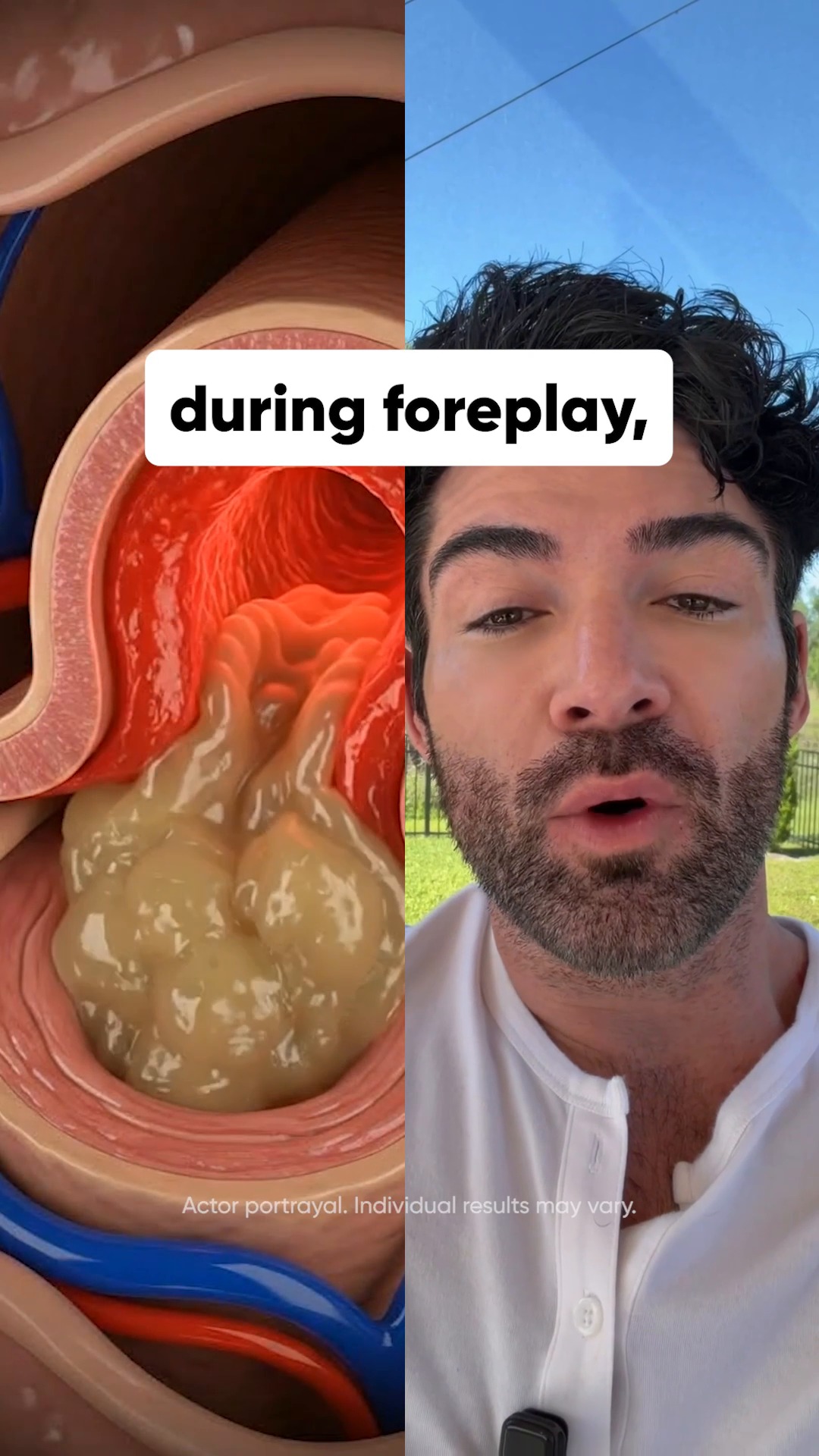
Video
FBIGANMSG
⭐⭐⭐⭐⭐ (4.7/5.0)
My Erectile Dysfunction is Gone, Thanks to Kegels!
It’s my third attempt to write this, and this is probably the best day of my life because finally, my ED is gone.
I first discovered my ED back in 2021, and it was a mixture of 60% psychological and 40% functional ED, so I had quite a lot of work to do.
I lost a relationship (with someone I considered the love of my life) because of that, and my sexual anxiety went over the moon from that moment on, but I’ve finally managed to get rid of it.
I knew I had to break free from this cycle, so I started researching solutions. That’s when I found Relatio and learned about Kegel exercises. The program helped me strengthen my pelvic muscles, regain control over my sexual function, and shift my mindset away from relying on external stimuli.
For me, the most crucial part of the process was overcoming the ED anxiety, and the first 3-4 days of this program helped a lot.
After just a few weeks of following the program, I began to notice a noticeable change. My erections became stronger and more natural, and I was able to enjoy intimacy with my partner again. I finally felt like I had control over my body and my sexual health.
If you're struggling with erectile dysfunction, I highly recommend giving Relatio a try. The personalized plan helped me regain my confidence and control.
Take the 3-minute quiz today and start your journey toward better sexual health.
Learn more
See full ad →
Started24 May 2026
Running for1d
Video
FBIGANMSG
⭐⭐⭐⭐⭐ (4.7/5.0)
45% of men experience PE.
It can be fixed without pills.
This plan helps you take control of your body and mind.
1. Take a 3-min quiz
2. Get a personalized program
3. Achieve long-term results without pills
Learn more
See full ad →
Started24 May 2026
Running for1d
Video
FBIGANMSG
⭐⭐⭐⭐⭐ (4.7/5.0)
All it takes is 21 days to beat sexual anxiety, and I'll prove it in the next 45 seconds
Sexual performance anxiety affects men across all ages and can trigger issues like erectile dysfunction or premature ejaculation, often straining relationships. Research shows that these challenges can increase the risk of emotional stress for both partners, creating a difficult cycle.
The good news? It’s fixable.
In just 21 days, men can improve their erectile control, strengthen their pelvic floor, and last up to 15 minutes.
I recommend using the Relatio program, which includes a step-by-step guide with Kegels, techniques, and secret tips for men’s sexual health. These exercises are simple and take only five minutes a day. You can do them standing, sitting, or even lying on the couch. Just tap below and try it now.
Learn more
See full ad →
Started24 May 2026
Running for1d
Video
FBIGANMSG
⭐⭐⭐⭐⭐ (4.7/5.0)
My Erectile Dysfunction is Gone, Thanks to Kegels!
It’s my third attempt to write this, and this is probably the best day of my life because finally, my ED is gone.
I first discovered my ED back in 2021, and it was a mixture of 60% psychological and 40% functional ED, so I had quite a lot of work to do.
I lost a relationship (with someone I considered the love of my life) because of that, and my sexual anxiety went over the moon from that moment on, but I’ve finally managed to get rid of it.
I knew I had to break free from this cycle, so I started researching solutions. That’s when I found Relatio and learned about Kegel exercises. The program helped me strengthen my pelvic muscles, regain control over my sexual function, and shift my mindset away from relying on external stimuli.
For me, the most crucial part of the process was overcoming the ED anxiety, and the first 3-4 days of this program helped a lot.
After just a few weeks of following the program, I began to notice a noticeable change. My erections became stronger and more natural, and I was able to enjoy intimacy with my partner again. I finally felt like I had control over my body and my sexual health.
If you're struggling with erectile dysfunction, I highly recommend giving Relatio a try. The personalized plan helped me regain my confidence and control.
Take the 3-minute quiz today and start your journey toward better sexual health.
Learn more
See full ad →
Started24 May 2026
Running for1d
Video
FBIGANMSG
⭐⭐⭐⭐⭐ (4.7/5.0)
45% of men experience PE.
It can be fixed without pills.
This plan helps you take control of your body and mind.
1. Take a 3-min quiz
2. Get a personalized program
3. Achieve long-term results without pills
Learn more
See full ad →
Started24 May 2026
Running for1d
Video
FBIGANMSG
⭐⭐⭐⭐⭐ (4.7/5.0)
Low energy when it comes to intimacy. Can't focus or follow through. Zero motivation and "drive" in bed. Always tired, even after a full night's sleep.
You keep saying, "I'll fix it someday." But weeks go by... and nothing changes.
A friend told me about the Relatio app. I was skeptical at first, but this app was different.
I took Relatio's 3-minute quiz, which helped me understand what was draining my testosterone and sexual "drive."
Now, I'm just... better. More energy, confidence, stamina, a stable “mood” in bed, and I feel like myself again.
Just tap below and try it now.
Learn more
See full ad →
Started24 May 2026
Running for1d
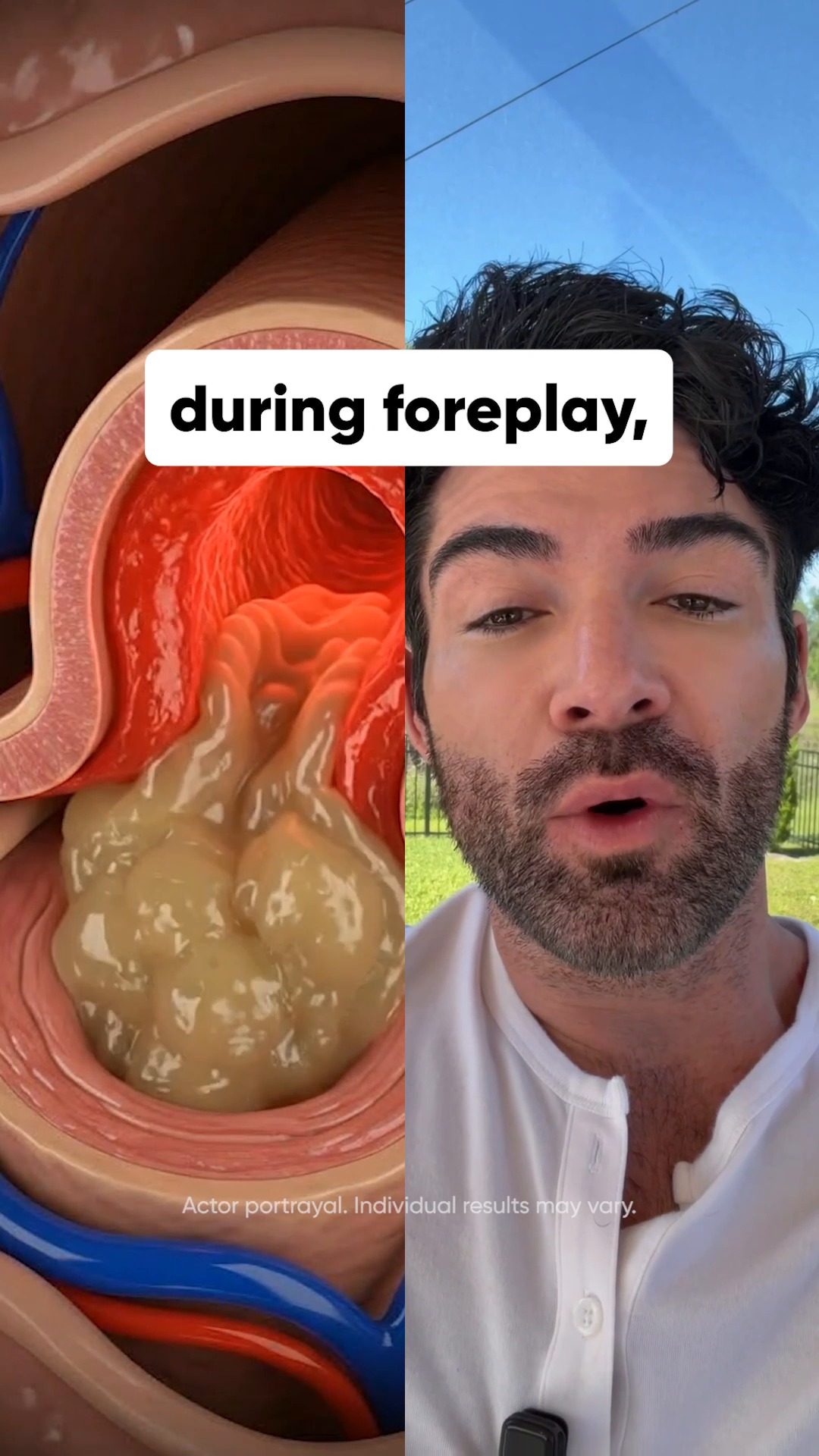
Video
FBIGANMSG
⭐⭐⭐⭐⭐ (4.7/5.0)
45% of men experience PE.
It can be fixed without pills.
This plan helps you take control of your body and mind.
1. Take a 3-min quiz
2. Get a personalized program
3. Achieve long-term results without pills
Learn more
See full ad →
Started23 May 2026
Running for2d
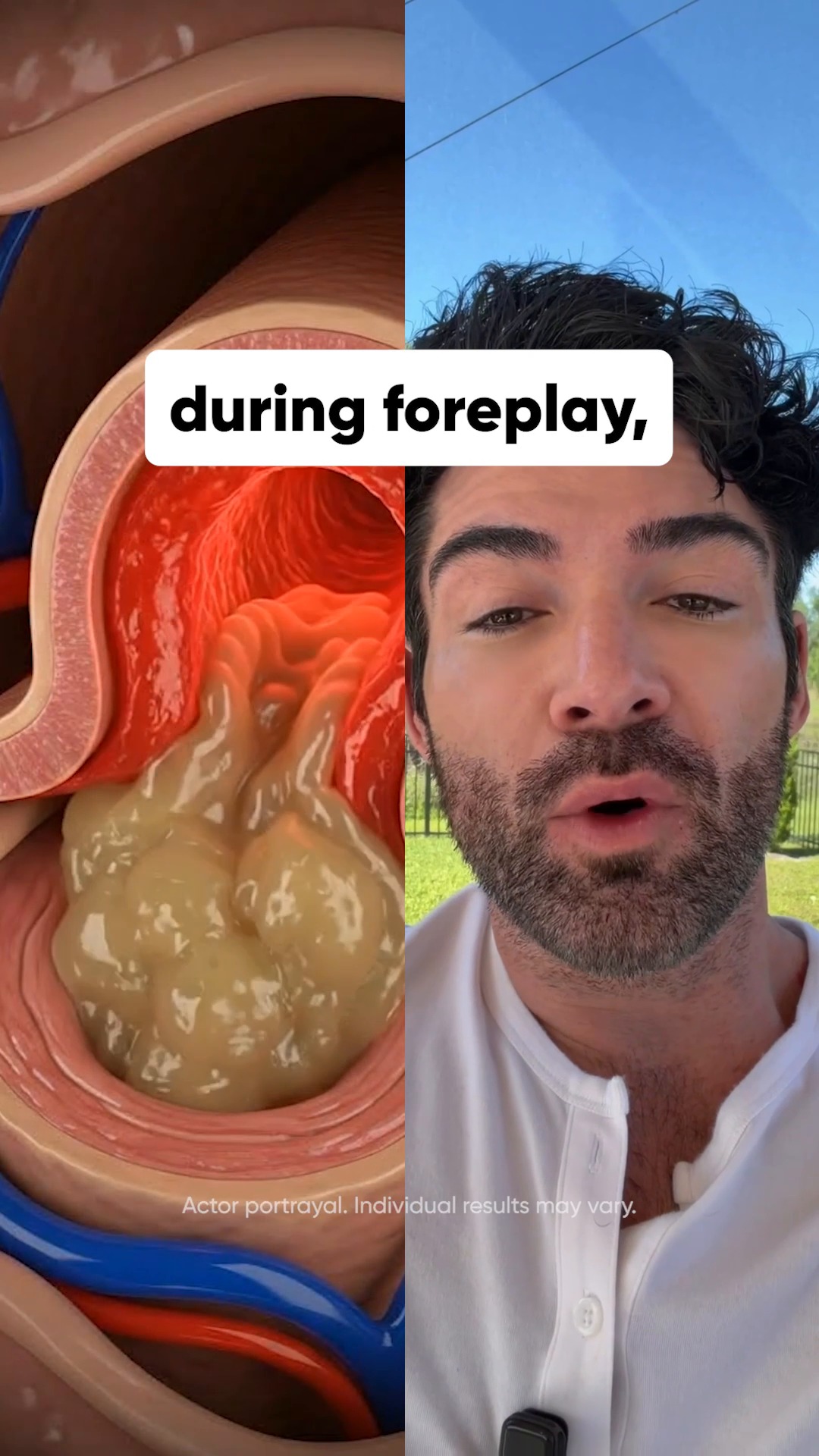
Video
FBIGANMSG
⭐⭐⭐⭐⭐ (4.7/5.0)
45% of men experience PE.
It can be fixed without pills.
This plan helps you take control of your body and mind.
1. Take a 3-min quiz
2. Get a personalized program
3. Achieve long-term results without pills
Learn more
See full ad →
Started23 May 2026
Running for2d
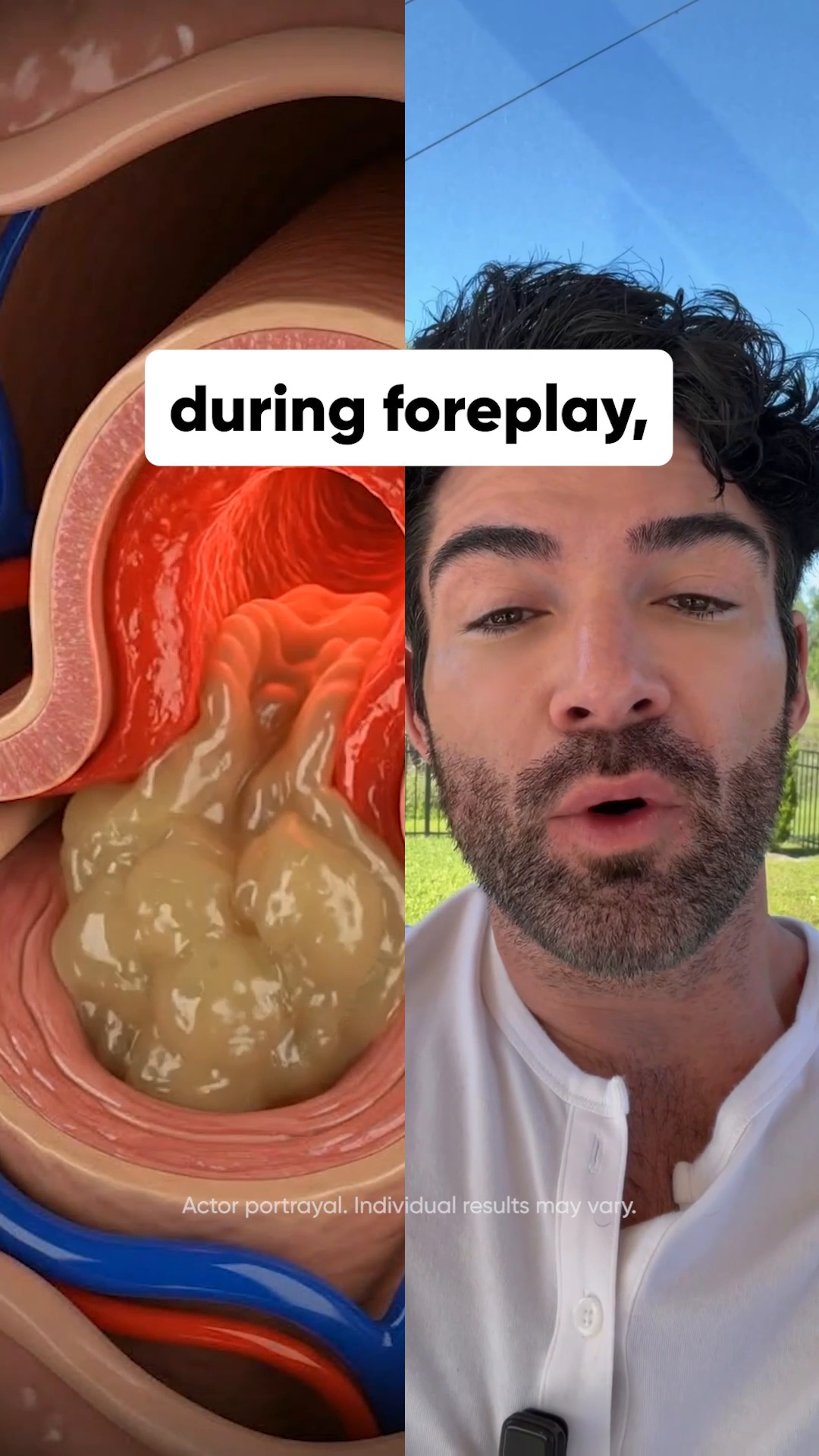
Video
FBIGANMSG
⭐⭐⭐⭐⭐ (4.7/5.0)
45% of men experience PE.
It can be fixed without pills.
This plan helps you take control of your body and mind.
1. Take a 3-min quiz
2. Get a personalized program
3. Achieve long-term results without pills
Learn more
See full ad →
Started23 May 2026
Running for2d

Video
FBIGANMSG
⭐⭐⭐⭐⭐ (4.7/5.0)
45% of men experience PE.
It can be fixed without pills.
This plan helps you take control of your body and mind.
1. Take a 3-min quiz
2. Get a personalized program
3. Achieve long-term results without pills
Learn more
See full ad →
Started23 May 2026
Running for2d
Video
FBIGANMSG
⭐⭐⭐⭐⭐ (4.7/5.0)
45% of men experience PE.
It can be fixed without pills.
This plan helps you take control of your body and mind.
1. Take a 3-min quiz
2. Get a personalized program
3. Achieve long-term results without pills
Learn more
See full ad →
Started23 May 2026
Running for2d

Video
FBIGANMSG
⭐⭐⭐⭐⭐ (4.7/5.0)
45% of men experience PE.
It can be fixed without pills.
This plan helps you take control of your body and mind.
1. Take a 3-min quiz
2. Get a personalized program
3. Achieve long-term results without pills
Learn more
See full ad →
Started23 May 2026
Running for2d
Video
FBIGANMSG
⭐⭐⭐⭐⭐ (4.7/5.0)
45% of men experience PE.
It can be fixed without pills.
This plan helps you take control of your body and mind.
1. Take a 3-min quiz
2. Get a personalized program
3. Achieve long-term results without pills
Learn more
See full ad →
Started23 May 2026
Running for2d
Video
FBIGANMSG
⭐⭐⭐⭐⭐ (4.7/5.0)
45% of men experience PE.
It can be fixed without pills.
This plan helps you take control of your body and mind.
1. Take a 3-min quiz
2. Get a personalized program
3. Achieve long-term results without pills
Learn more
See full ad →
Started13 May 2026
Running for12d

Video
FBIGANMSG
⭐⭐⭐⭐⭐ (4.7/5.0)
45% of men experience PE.
It can be fixed without pills.
This plan helps you take control of your body and mind.
1. Take a 3-min quiz
2. Get a personalized program
3. Achieve long-term results without pills
Learn more
See full ad →
Started27 Apr 2026
Running for28d
Video
FBIGANMSG
⭐⭐⭐⭐⭐ (4.7/5.0)
45% of men experience PE.
It can be fixed without pills.
This plan helps you take control of your body and mind.
1. Take a 3-min quiz
2. Get a personalized program
3. Achieve long-term results without pills
Learn more
See full ad →
Started25 May 2026
Running for0d
Video
FBIGANMSG
⭐⭐⭐⭐⭐ (4.7/5.0)
45% of men experience PE.
It can be fixed without pills.
This plan helps you take control of your body and mind.
1. Take a 3-min quiz
2. Get a personalized program
3. Achieve long-term results without pills
Learn more
See full ad →
Started25 May 2026
Running for0d
Video
FBIGANMSG
⭐⭐⭐⭐⭐ (4.7/5.0)
45% of men experience PE.
It can be fixed without pills.
This plan helps you take control of your body and mind.
1. Take a 3-min quiz
2. Get a personalized program
3. Achieve long-term results without pills
Learn more
See full ad →
Started25 May 2026
Running for0d
Video
FBIGANMSG
⭐⭐⭐⭐⭐ (4.7/5.0)
45% of men experience PE.
It can be fixed without pills.
This plan helps you take control of your body and mind.
1. Take a 3-min quiz
2. Get a personalized program
3. Achieve long-term results without pills
Learn more
See full ad →
Started25 May 2026
Running for0d